Completions

Three papers are highlighted as the primary contributions because of their broad industry relevance. They focus on improving formation particle-size characterization, expanding the application of openhole gravel packs in depleted and compartmentalized reservoirs, and advancing the understanding of capillary pressure in sand production.

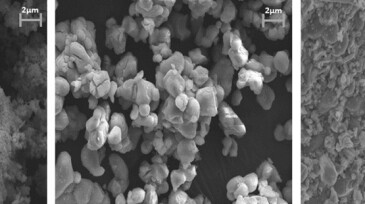
This paper aims to establish a set of best practices for generating particle-size-distribution data from core samples.

This paper discusses the successful execution of two openhole gravel-pack completions in two Gulf of Mexico fields with depleted reservoirs.
-
 Two new studies from completions experts suggest the global upstream industry has a major opportunity in medium-quality reservoirs.
 -
The service giant shares new details about its automated fracturing spreads that slash human operator workload by 88%.
-
Industry leaders champion collaborative solutions as essential for overcoming fracturing limitations.
-
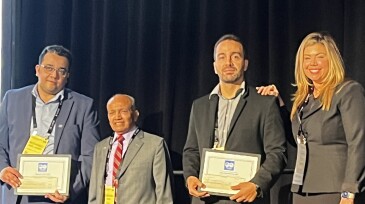
Three graduate students have received the 2025 SPE Hydraulic Fracturing Technology Conference and Exhibition Outstanding Graduate Student Award.
-
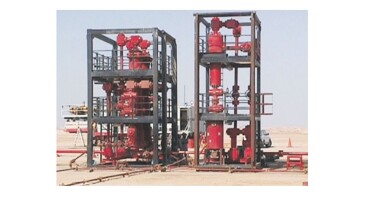
This study introduces a cleanup- and flowback-testing approach incorporating advanced solids-separation technology, a portable solution, equipment automation, improved metallurgy, and enhanced safety standards.
-
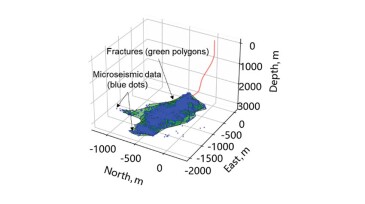
In this paper, an energy-based 3D fracture-reconstruction method is proposed to derive the complex fracture network from microseismic data in a shale gas reservoir.
-
This selection of cutting-edge articles spotlights how experimental concepts are now driving cost-saving strategies in unconventional development. It’s a reminder that innovation often comes from creative thinking, not just new tools or tech partnerships.
-
This paper investigates the effect of calcium oxide as an expansive agent on the performance of geopolymer-based sealing materials, with successful application in oil and gas wells at shallow depths.
-
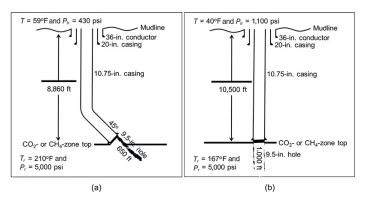
In this paper, a dynamic multiphase-flow simulator is used to evaluate the effectiveness and suitability of using a subsea capping stack to respond to a CO₂ well blowout.
-
The objective of this paper is to outline the importance of new standards for studying hydraulic sealability of barrier materials, with an emphasis on interface analysis.