Completions

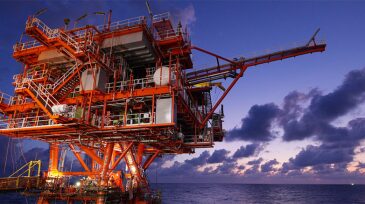
This edition highlights three offshore technology papers that address a common industry theme: how targeted engineering solutions can reduce uncertainty, shorten operations, and make technically constrained offshore well activities more executable.

Three papers are highlighted as the primary contributions because of their broad industry relevance. They focus on improving formation particle-size characterization, expanding the application of openhole gravel packs in depleted and compartmentalized reservoirs, and advancing the understanding of capillary pressure in sand production.

This paper aims to establish a set of best practices for generating particle-size-distribution data from core samples.
-
 Oil and gas producers in the Gulf of Thailand face unique technical challenges. This review of papers illustrates some of the innovative solutions used in the region.
 -
This paper analyzes water production from horizontal shale wells in five sections of the Wattenberg field in northeastern Colorado. Models were developed for these wells for future water-production prediction and a spatial analysis was also conducted.
-
Kerogen Exploration is excited about the Vista Grande project, a Woodford Shale play in a west-Texas Permian sub-basin that offers further targets lying above in the Barnett Shale.
-
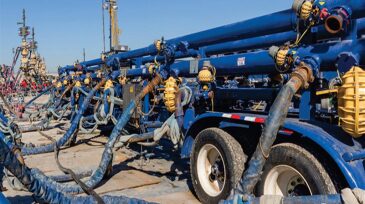
A new spread of stimulation equipment from the world’s largest service company demonstrates the latest significant step to creating a more automated oilfield.
-
Deepwater operators continually face technical and environmental challenges to drilling and completing wells safely and efficiently.
-
This paper focuses on the application of radio-frequency-identification technology to enable an operator to eliminate an intervention run (or intermediate liner) for a 10,000-ft reservoir section.
-
The industry has developed a deep and healthy respect for systems-engineering processes and the associated full considerations during the deployment of new technologies. The result has been a significant improvement in the successful use and broader deployment of these attractive technologies.
-
In North America’s most active shale fields, the drilling and hydraulic fracturing of new wells is directly placing older adjacent wells at risk of suffering a premature decline in oil and gas production.
-
A closer look at technological and mechanical solutions being developed to limit exposure to respirable silica dust during hydraulic fracturing operations in the wake of US government regulations.
-
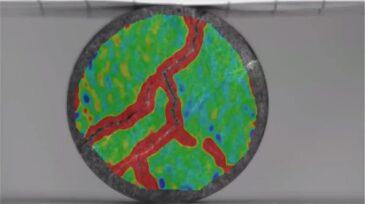
Technology that allows researchers to see stress forming inside rock samples may help unravel some of the mysteries associated with fracture behavior.