Completions

Output is rising fast in the South American shale play and putting Argentina on a course to soon reach 1 million B/D.

This case study presents a procedure in which the operator compared production from wells with adjusted wettability to a control group, finding that the adjustments resulted in significant improvements in production and reductions in produced water.

This paper presents a study that confirms glass-reinforced-epoxy-lined tubing as a reliable, cost-effective solution for long-term water-injection service in moderate-salinity offshore environments.
-
 The complete paper describes an experimental study performed to investigate the onset of liquid loading in a 6-in. production casing at various inclination angles.
 -
This paper discusses a new, comprehensive cuttings-transport model designed to enable safe and improved hole-cleaning operations.
-
New regulations have recently commenced with the effect that all onshore oil and gas exploration and production proposals involving hydraulic fracturing in Western Australia now will need to be referred to the Environmental Protection Authority for assessment.
-
When a plug gets stuck in a well, consider the cause. Often stuck fracturing tools are a warning sign of casing trouble. Companies that have investigated plug problems have been surprised by the findings.
-
Schlumberger and a Middle East offshore logistics company signed an agreement to develop a modular stimulation vessel as part of Qatar’s program aimed at localizing the energy sector’s supply chain and creating new investment opportunities.
-
Field examples presented in the complete paper describe principles of data acquisition with a sand-detection tool when run in combination with a production logging string and results of logging in slightly deviated wells completed with sand screens.
-
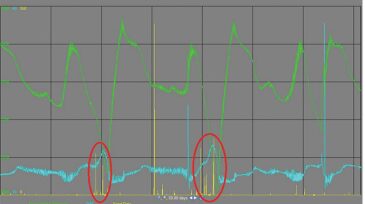
The complete paper discuses a well with a history of sand production that exhibits long cyclic slugging behavior.
-
Sand-control-installation failures range from minor issues that can be remedied easily to catastrophic events that put the entire well and investment at risk.
-
Sand control has evolved over the years; however, the fundamentals of screen sizing have not changed. Particle-size distribution remains the basis for most designs. Laser diffraction has provided better definition of fines, and greater focus is placed now on particle-shape characterization.
-
Traditionally, a wellhead system requires a drilling lockdown sleeve (LDS) during drilling operations to ensure that the seal assembly is rigid and prevents dynamic movement. By eliminating the LDS, however, the operator will save multiple trips into the well.