Completions

Three papers are highlighted as the primary contributions because of their broad industry relevance. They focus on improving formation particle-size characterization, expanding the application of openhole gravel packs in depleted and compartmentalized reservoirs, and advancing the understanding of capillary pressure in sand production.

This paper aims to establish a set of best practices for generating particle-size-distribution data from core samples.

This paper discusses the successful execution of two openhole gravel-pack completions in two Gulf of Mexico fields with depleted reservoirs.
-
 This study emphasizes the vital need to evaluate well conditions and working-fluid compatibility with coiled tubing materials to prolong coiled tubing operational life.
 -
This study introduces a detailed model to capture the physics and chemistry of acid flow in complex horizontal wells completed in carbonate formations.
-
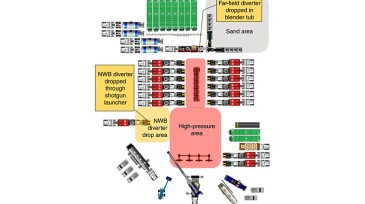
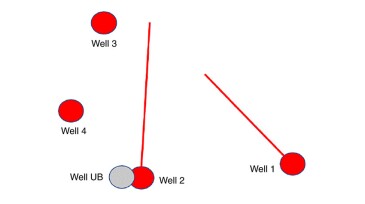
The authors of this paper describe a project in which far-field diverters were pumped to mitigate wellbore sanding and production loss in existing parent wells.
-
Engineers desperately need an alternative to acid placement through pipe, coiled tubing, or bullheading. For example, propellants have been around for years; however, their performance has not quite met the hype. Nevertheless, several case histories have been authored to suggest their efficacy; historically, some treatments have even been wildly successful.
-
This paper describes the application of an underbalanced coiled tubing technology in tight sandstones, using an integrative approach that incorporates petrophysical, geophysical, and reservoir engineering data.
-
Fracture monitoring to optimize fluid volumes and designs remains a critical area of development. Research is ongoing with the focus on combining different monitoring technologies including tracers, fiber optics, downhole cameras, and microseismic monitoring.
-
Years in the making, the program sponsored by the US Department of Energy is celebrating its latest geothermal energy breakthrough in southwestern Utah.
-
Operators are turning the tide on the Lower Tertiary trend with increasingly large stimulations that are also pushing the limits of offshore technology.
-
Matthew Bryant has spent years trying to convince engineers that the API proppant testing standard has significant limitations. And he may well be right.
-
This paper presents laboratory testing and application of a resin-cement system designed to be placed as a tail slurry to provide enhanced mechanical properties compared with a conventional slurry.