Completions

This edition highlights three offshore technology papers that address a common industry theme: how targeted engineering solutions can reduce uncertainty, shorten operations, and make technically constrained offshore well activities more executable.

Three papers are highlighted as the primary contributions because of their broad industry relevance. They focus on improving formation particle-size characterization, expanding the application of openhole gravel packs in depleted and compartmentalized reservoirs, and advancing the understanding of capillary pressure in sand production.

This paper aims to establish a set of best practices for generating particle-size-distribution data from core samples.
-
 The implementation of fishbone stimulation helped to more than double estimated well productivity and tripled the production rate in a tight carbonate reservoir well compared with conventional stimulation during initial testing.
 -
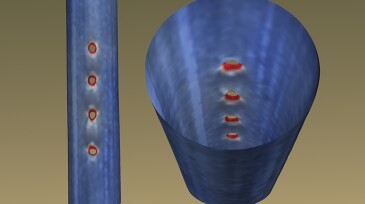
When fracturing, simply shooting all the perforations at the same spot in the casing can offer increased production at a low cost.
-
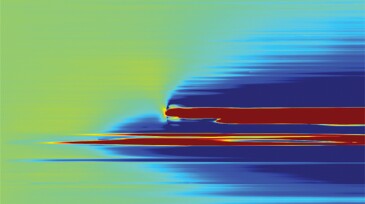
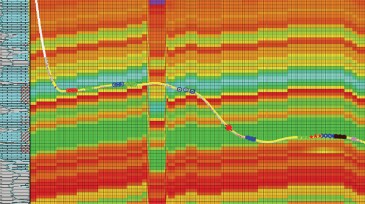
This study in a shale-oil formation quantified the hydraulic fracture propagation process and described the fracture geometry by developing a geomechanical forward model and a Green’s function-based inversion model for low-frequency distributed acoustic sensing data interpretation, substantially enhancing the value of the LF-DAS data in the process.
-
This paper’s authors describe the development of a coiled tubing (CT) nitrogen-lift design in which CT and geothermal reservoir simulations were combined to overcome modeling limitations.
-
SponsoredHigh-resolution optical measurements hold the key to unlocking the performance of hydraulically fractured wells
-
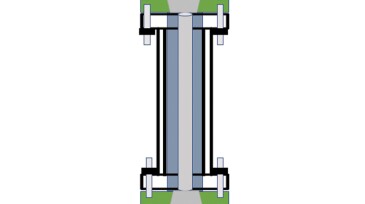
The paper describes a methodology of verifying that coiled tubing strings have not been subject to erosion caused by annular fracturing operations.
-
The authors describe a carbonate reservoir stimulation technique able to deploy acids in the rock far away from the wellbore through mechanically drilled holes with known depths and azimuths.
-
This paper summarizes the design processes, selection criteria, challenges, and lessons learned during design and execution phases for fracturing in a tight, low-permeability carbonate reservoir with thin layers.
-
This paper presents recent results from a rigorous pilot-scale demonstration of natural-gas foam over a range of operating scenarios relevant to surface and bottomhole conditions with a variety of base-fluid mixtures.
-
In previous features, the focus has been on what is new or reimagined. Therefore, I thought that, in selecting papers for this year’s feature, it would be useful to select ones that look at coiled tubing operations performed and that have been evaluated in one way or another.