Completions

Three papers are highlighted as the primary contributions because of their broad industry relevance. They focus on improving formation particle-size characterization, expanding the application of openhole gravel packs in depleted and compartmentalized reservoirs, and advancing the understanding of capillary pressure in sand production.

This paper aims to establish a set of best practices for generating particle-size-distribution data from core samples.

This paper discusses the successful execution of two openhole gravel-pack completions in two Gulf of Mexico fields with depleted reservoirs.
-
 Bringing the Heat: Aramco Field Tests High-Temperature Chemistry To Slash Tight-Gas Completion CostsSaudi Aramco and university researchers are experimenting with a thermochemical fracturing fluid that aims to eliminate more than half of the pumping horsepower typically required to complete horizontal wells.
 -
Specifically targeting ingrained thinking, the selected papers demonstrate the game-changing results that can be achieved even when targeting long-established norms. They demonstrate everything that our industry should be proud of and what we strive for.
-
This article addresses a means to improve hydraulic fracturing operations by measuring the perforation effectiveness on a stage-by-stage basis before the hydraulic fracturing process begins.
-
Schlumberger and a Middle East offshore logistics company signed an agreement to develop a modular stimulation vessel as part of Qatar’s program aimed at localizing the energy sector’s supply chain and creating new investment opportunities.
-
Field examples presented in the complete paper describe principles of data acquisition with a sand-detection tool when run in combination with a production logging string and results of logging in slightly deviated wells completed with sand screens.
-
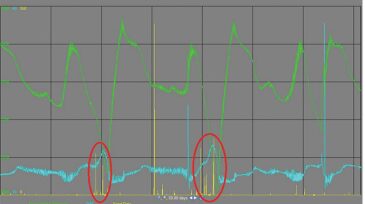
The complete paper discuses a well with a history of sand production that exhibits long cyclic slugging behavior.
-
Sand-control-installation failures range from minor issues that can be remedied easily to catastrophic events that put the entire well and investment at risk.
-
Sand control has evolved over the years; however, the fundamentals of screen sizing have not changed. Particle-size distribution remains the basis for most designs. Laser diffraction has provided better definition of fines, and greater focus is placed now on particle-shape characterization.
-
Traditionally, a wellhead system requires a drilling lockdown sleeve (LDS) during drilling operations to ensure that the seal assembly is rigid and prevents dynamic movement. By eliminating the LDS, however, the operator will save multiple trips into the well.
-
The complete paper describes the development and implementation of a glass-plug solution that closed the technical gaps that had previously inhibited fully intervention-free operation for completion installation.