Data & Analytics

Shell has demonstrated drone-in-a-box operations from its Mars floating production unit, becoming the first operator in the region to secure FAA approval for self-approved offshore beyond-visual-line-of-sight flights. JPT Senior Technology Editor Jennifer Pallanich visited Shell Technology Center Houston to see the system in action.

Panelists at the SPE Subsea Well Intervention Symposium discussed where AI is delivering value today, where risks remain, and how engineers can best determine its usefulness.

As digital technologies become commonplace, industry leaders say core engineering knowledge remains essential for making informed decisions and avoiding costly mistakes.
-
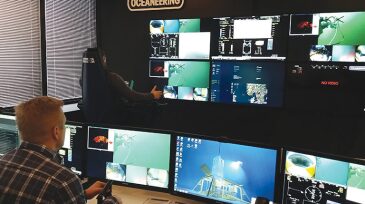
 Operators for remotely operated vehicles will be getting more remote in the future as land-based control begins to become a reality.
 -
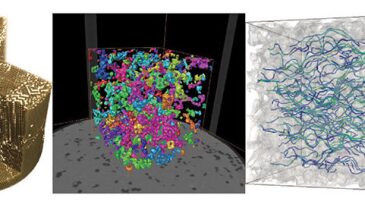
In an effort to foster collaboration in an area where there is currently very little, researchers at the University of Texas at Austin (UT) created a new web-based application for storing and sharing CT images of rocks.
-
A real-time method is presented to predict impending stuck pipe with sufficient warning to prevent it. The new method uses automated analysis of real-time modeling coupled with real-time-data analysis.
-
Over the last couple of decades, we have seen a steady stream of “intelligent” innovations go from ideas to infancy to catalog solutions.
-
Permanent downhole gauges (PDGs) can provide a continuous record of flow rate and pressure, which provides extensive information about the reservoir. In this work, a machine-learning framework based on PDG data was extended to two applications: multiwell testing and flow-rate reconstruction.
-
This paper describes an “active” monitoring technique that uses a direct search method to optimize the sequence of interval-control-valve (ICV) positions during a routine multirate test in an I-well.
-
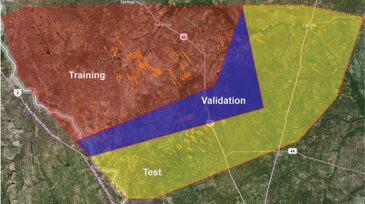
The authors present a geology-driven deep-learning estimated-ultimate-recovery (EUR)-prediction model for multistage hydraulically fractured horizontal wells in tight gas and oil reservoirs.
-
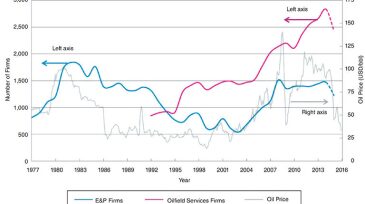
Low prices require doing things differently. It is a hopeful sign for the future for innovators who have been struggling to keep going and have potential customers with little to spend and a lot to worry about.
-
The case for focusing on boosting recovery from older fields in a depressed drilling climate is compelling. At a breakfast session during IHS CERAWeek on squeezing more oil from brownfields in a low oil price environment, panelists discussed today’s improved field recovery capabilities.
-
It has been over a year since Repsol and IBM announced their plans to jointly develop cognitive technologies that would allow human decision makers operating in the oil and gas industry to interact with computers more effectively.