Data & Analytics

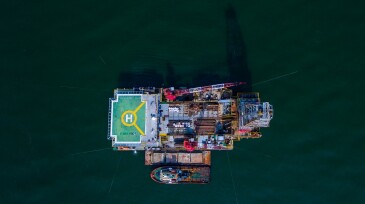
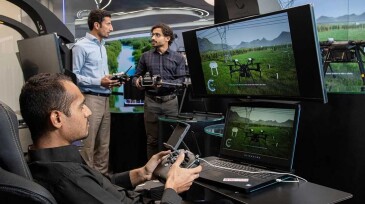
Shell has demonstrated drone-in-a-box operations from its Mars floating production unit, becoming the first operator in the region to secure FAA approval for self-approved offshore beyond-visual-line-of-sight flights. JPT Senior Technology Editor Jennifer Pallanich visited Shell Technology Center Houston to see the system in action.

Panelists at the SPE Subsea Well Intervention Symposium discussed where AI is delivering value today, where risks remain, and how engineers can best determine its usefulness.

As digital technologies become commonplace, industry leaders say core engineering knowledge remains essential for making informed decisions and avoiding costly mistakes.
-
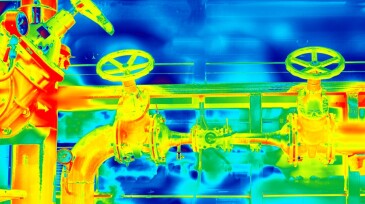
 This article explores the implementation of artificial intelligence vision for leak monitoring automation in the oil and gas industry and its role in improving safety standards, operational efficiency, and environmental performance.
 -
This paper investigates the use of machine learning to rapidly predict the solutions of a high-fidelity, complex physics model using a simpler physics model.
-
This study proposes a hybrid model that combines the capacitance/resistance model, a machine-learning model, and an oil model to assess and optimize water-alternating-gas (WAG) injectors in a carbonate field.
-
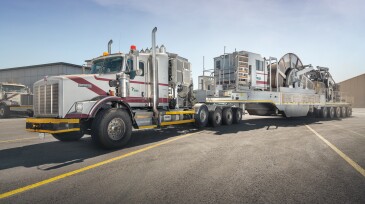
SponsoredTAQA is commencing its journey into the year 2024 with the successful launching of many innovative coiled tubing technologies and solutions, technologies that will transform the nature of well intervention operations into a new era. Read this article and dive into the high-tier coiled tubing technology offerings from TAQA.
-
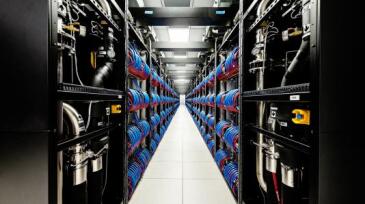
The new system at the US Department of Energy’s Argonne National Laboratory achieved more than a quintillion calculations per second.
-
The companies are combining their technologies in an effort to help upstream oil and gas operators monitor, report, and reduce emissions.
-
The world's largest oil and gas company has selected French firm Pasqal to provide it with a 200-qubit quantum computer.
-
With the growing reliability of uncrewed aircraft, oil companies are now eager to have offshore rigs supplied in a more systematic and autonomous way. So, why haven’t we heard more about using uncrewed craft?
-
The Saudi Arabian major is finding new ways of using drones to help improve the safety, efficiency, and environmental performance of its operations.
-
A report from GlobalData shows how digital twins—digital representations of physical assets, systems, people, or processes—are increasingly helping oil and gas companies throughout the life cycle of their operations.