Data & Analytics

Switching from continuous circulation to cyclic huff-‘n’-puff operation in enhanced geothermal systems can significantly delay thermal breakthrough, sustain higher production temperatures, and improve long-term economic performance.

The two companies say they plan to work together to use agentic AI to increase the capabilities of technical experts.

This article is the first in a Q&A series from the SPE Methane Emissions Management Technical Section (MEMTS) on methane intelligence and how oil and gas teams translate emissions data into credible decisions and measurable reductions.
-
 A hack on Italian oil services firm Saipem that crippled more than 300 of the company’s computers used a variant of the notorious Shamoon virus, Saipem said, a development that links the case to a massive attack in 2012 on Saudi Aramco.
 -
The blockchain-based automated system pilot is expected to integrate oil and gas production, providing a platform for the tracking, validating, and execution of transactions at every stage of the project life cycle.
-
The Italian oil-services company is still assessing the scope and impact of a cyberattack that targeted its servers in the Middle East, according to the company’s head of digital and innovation.
-
Companies are bringing satellite monitoring to the unconventional oilfield—namely the Permian Basin—where they are training machine learning models to track and predict drilling and completions work.
-
The greater connectivity of the digital age and the Internet of Things has resulted in increased efficiency through big data, analytics, sensors, and the ability to automate highly sensitive tasks. However, it has also opened the doors to cyberattacks.
-
Discussions of big data and its management are increasing across our industry and disciplines. This selection of technical papers takes a look at data mining, the ethical issues associated with it, and the status of data-driven methods.
-
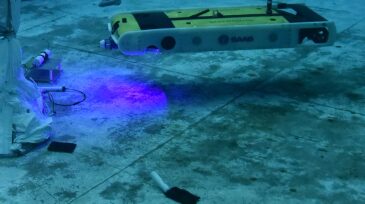
ROVs dominate the world of subsea inspections, maintenance, and repair, but as operators work in a post-downturn economy, autonomous systems have become more in demand. Autonomous inspections are possible today, but how can they help with light and heavy intervention?
-
Research has found that most cyberattacks against the energy and utilities industry transpire and thrive inside enterprise information-technology networks rather than critical infrastructure.
-
Data-driven methods offer significant advantages in the industry, under certain conditions, over conventional methods. But reservations still exist about their use. The paper serves to bridge the gap between unclear understanding of these methods and their successful acceptance and implementation.
-
The use of data-intensive decision making and smart risk-management solutions has resulted in the improvement of the ethical foundations underlying the industry. These digital tools and machine-based cognitive processes for risk-avoidance have also helped restore the public’s trust in the industry.