Data & Analytics

Switching from continuous circulation to cyclic huff-‘n’-puff operation in enhanced geothermal systems can significantly delay thermal breakthrough, sustain higher production temperatures, and improve long-term economic performance.

The two companies say they plan to work together to use agentic AI to increase the capabilities of technical experts.

This article is the first in a Q&A series from the SPE Methane Emissions Management Technical Section (MEMTS) on methane intelligence and how oil and gas teams translate emissions data into credible decisions and measurable reductions.
-
 With the availability of more-complex smart-well instrumentation, immediate evaluation of the well response is possible as changes in the reservoir or well occur.
 -
The complete paper evaluates optimization techniques to develop, or support, business cases for intelligent or smart wells.
-
The most-competitive emerging systems blend artificial intelligence to bring better efficiency to the human work that results in good business decisions. As a result, we waste less time and fewer resources finding and manipulating data and focus more on complex engineering judgment.
-
SPE’s newly launched technical section will provide a central hub for questions, answers, discussion, collaboration, and networking around unmanned systems for the oil and gas industry.
-
Honeypots and pen testers. If these terms are unfamiliar, you’ll want to learn their roles in the safekeeping of critical evaluation and operational data in oil and gas activities, from the reservoir to the well pad to pipelines.
-
Atos, a global leader in digital services, and Siemens, a global engineering leader, announced that they have entered into a memorandum of understanding and will leverage their portfolios to help customers establish an integrated first line of defense against cyberattacks.
-
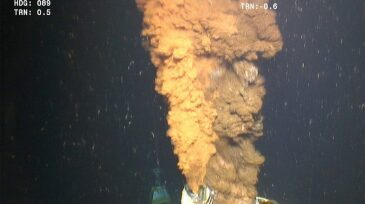
An investigator from the US National Energy Technology Laboratory examines the role remotely operated vehicles played in flow rate estimation from the Macondo well.
-
Industry CIOs examine the challenges operators and service companies face in understanding cybersecurity threats.
-
A real-time production-surveillance and -optimization system has been developed to integrate available surveillance data with the objective of driving routine production optimization.
-
This paper describes how the use of production-modeling tools, coupled with field pressure/temperature-data-acquisition systems and programming software, served as a means to improve production allocation and surveillance on a real-time basis in the Greater Angostura Field.