Data & Analytics
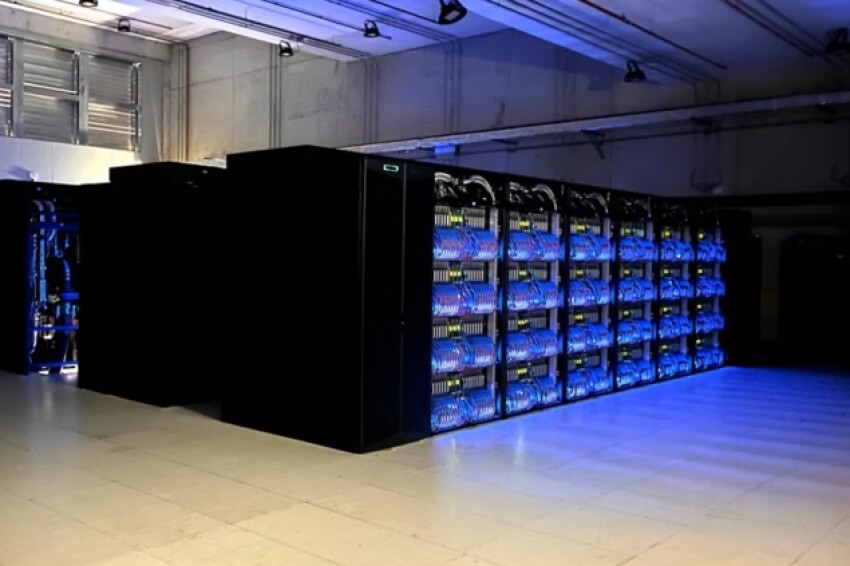
With the latest addition, the Italian major’s computational capacity passes the exaflop threshold, making the firm the world’s leading company by computing power in the new TOP500 global ranking.

This work describes a study in which distributed data parallel training, paired with a node-local caching pipeline, enabled efficient multigraphics-processing-unit scaling for a CO₂-storage graph-neural-network surrogate while maintaining generalization.

This paper presents a novel reservoir engineering/reservoir simulation approach—a data-driven interwell-connectivity model augmented as a digital twin—to predict reservoir dynamics and optimize operations in the Changqing oil field of China.
-
 "Sooner or later, we will get machines that are at least as intelligent as humans are," says Christof Koch, chief scientist and president of the Allen Institute for Brain Science in Seattle, Washington.
 -
As can be common in many technical fields, the landscape of specialized roles is evolving quickly. With more people learning at least a little machine learning, this could eventually become a common skill set for every software engineer.
-
To keep pace with the digital age, the critical infrastructure and automation industries are looking beyond today’s control systems for new, common technologies to help balance requirements for uptime with digital technologies. Open standards can help.
-
The future of intelligent operations in our industry is being driven by advances from other sectors that have been embraced for petroleum applications. Foundational changes already taking place include advances in the type and volume of data being acquired and how the data are used.
-
This paper describes an automated work flow that uses sensor data and machine-learning (ML) algorithms to predict and identify root causes of impending and unplanned shutdown events and provide actionable insights.
-
Increasing accuracy in models is often obtained through the first steps of data transformations. This guide explains the difference between the key feature-scaling methods of standardization and normalization and demonstrates when and how to apply each approach.
-
Rapid development of more-accurate simulator engines has given researchers the opportunity to generate sufficient data to train robotic policies for real-world deployment. However, moving from simulation to reality remains one of the greatest challenges of modern robotics.
-
Researchers have created software that borrows concepts from Darwinian evolution, including “survival of the fittest,” to build AI programs that improve generation after generation without human input.
-
The complete paper presents a discussion of the use of intelligent well completion in Santos Basin Presalt Cluster wells.
-
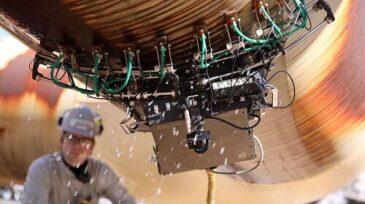
Gecko Robotics is providing the energy industry with artificial-intelligence-enabled robots to inspect infrastructure and supply massive amounts of data to help predict failures before they occur.