Data & Analytics

This work describes a study in which distributed data parallel training, paired with a node-local caching pipeline, enabled efficient multigraphics-processing-unit scaling for a CO₂-storage graph-neural-network surrogate while maintaining generalization.

This paper presents a novel reservoir engineering/reservoir simulation approach—a data-driven interwell-connectivity model augmented as a digital twin—to predict reservoir dynamics and optimize operations in the Changqing oil field of China.

This work uses a novel pseudosteady-state-based simulation to reduce training-data-generation cost while maintaining high-performance predictions of data-driven proxy models for carbon-sequestration projects.
-
 This article is the third in a Q&A series from the SPE Research and Development Technical Section focusing on emerging energy technologies. In this piece, Zikri Bayraktar, a senior machine learning engineer with SLB’s Software Technology and Innovation Center, discusses the expanding use of artificial intelligence in the upstream sector.
 -
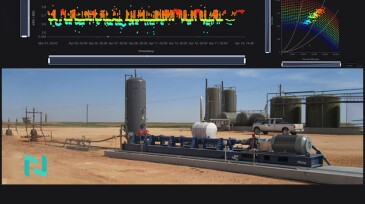
This article presents a results-driven case study from an ongoing collaboration between a midstream oil and gas company and Neuralix Inc.
-
As carbon capture scales up worldwide, the real challenge lies deep underground—where smart reservoir management determines whether CO₂ stays put for good.
-
The SPE Reservoir Technical Discipline and Advisory Committee invite their Reservoir members worldwide to participate in a new survey aimed at assessing the current state of reservoir engineering across industry and academia. Deadline is 21 July 2025.
-
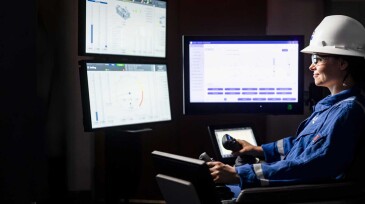
The agreement focuses on improving operational efficiency and consistency through advanced digital tools and real-time data integration.
-
TotalEnergies and the French company Mistral AI are joining forces to extend the use of AI in improving TotalEnergies’ performance, especially in low-carbon energies. The partners plan to set up a joint innovation lab focused on artificial intelligence.
-
Operators that demand control of their future position in global energy production are forging ahead into new territory by digitally transforming their operations at a time that still feels relatively comfortable. They’ve recognized that, while traditional approaches served the industry well for many decades, the chance to reimagine how they do things is not something…
-
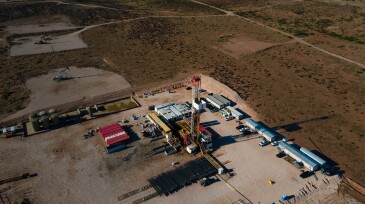
Secondary and tertiary efforts are critical for sustaining the productive lives of unconventional plays.
-
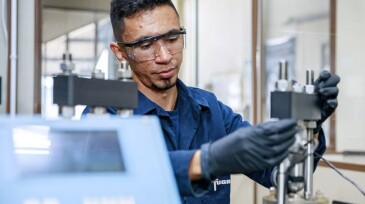
The new lab expands the company's capabilities in the region by 20% by adding more than 30 testing stations.
-
Foundation models are rapidly emerging as a transformative force across industries. While their effect on natural language processing and computer vision is well-documented, their potential in specialized engineering domains, particularly within the critical oil, gas, and broader energy sectors, is vast and increasingly recognized. This article explores how these powe…