Data & Analytics
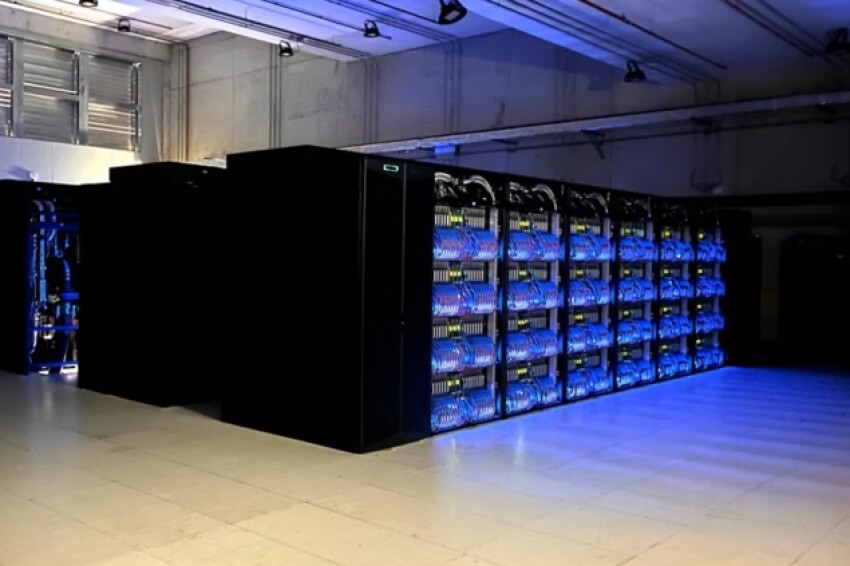
With the latest addition, the Italian major’s computational capacity passes the exaflop threshold, making the firm the world’s leading company by computing power in the new TOP500 global ranking.

This work describes a study in which distributed data parallel training, paired with a node-local caching pipeline, enabled efficient multigraphics-processing-unit scaling for a CO₂-storage graph-neural-network surrogate while maintaining generalization.

This paper presents a novel reservoir engineering/reservoir simulation approach—a data-driven interwell-connectivity model augmented as a digital twin—to predict reservoir dynamics and optimize operations in the Changqing oil field of China.
-
 Collaboration and technology will help the industry meet its toughest challenges, experts said during the opening session at ATCE.
 -
In this exclusive Q&A, Giovanni Cristofoli, senior vice president of bp Solutions, shares insights into how his team is redefining operational strategies and fostering agility to bridge competitive gaps and enhance efficiency. Highlights include the integration of digital tools, data science, and a unified approach to tackling complex problems.
-
Accuracy, complexity, costs, and skills availability may make it difficult to get the most out of digital twins and even potentially misrepresent or miss actual changes in the status of systems or facilities.
-
The new contract extends a decadelong relationship and expands the use of AI and digital twins.
-
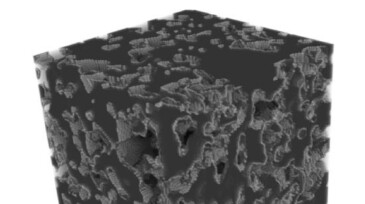
This paper presents a novel modeling framework for predicting residual oil saturation in carbonate rocks. The proposed framework uses supervised machine learning models trained on data generated by pore-scale simulations and aims to supplement conventional coreflooding tests or serve as a tool for rapid residual oil saturation evaluation of a reservoir.
-
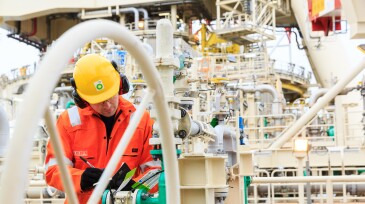
The main objective of this paper is to provide a solution that eliminates the risks of working in confined spaces and aids in preventive maintenance.
-
SPE is excited to livestream these thought-provoking and informative Tech Talks from the SPE Energy Stream studio at the SPE Annual Technology Conference and Exhibition, 23–25 September, in New Orleans.
-
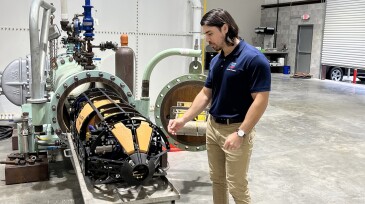
The traditional method of inspecting tanks puts workers in danger. Using robots instead can keep workers out of harm’s way.
-
You’ve heard of generative artificial intelligence, and odds are you’ve used it. But do you know how it works?
-
Surveillance technologies have undergone a revolution, reshaping how facilities, wells, and reservoirs are monitored. These advancements not only have increased the scale at which these technologies are deployed but also have led to an unprecedented influx of data. The sheer volume of data, however, poses a significant challenge to traditional analytical methods.