Data & Analytics

This research focuses on combining physics-based expert rules with machine learning to improve the detection of failure-related events in electrical submersible pumps.

A combination of physics principles and machine-learning techniques is used in this work to develop a virtual flowmeter for oil-production optimization in electrical-submersible-pump-lifted oil wells, resulting in reliable generalization.

This paper presents the deployment of an artificial intelligence-enabled autonomous gas lift optimization system, integrating real-time centralized advanced process control with cloud-based analytics to enhance artificial gas lift performance in producer wells.
-
 The infrastructure engineering software firm is expected to pay more than $1 billion to acquire geological and geophysical modeling software developer Seequent.
 -
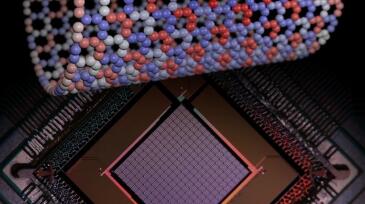
Honeywell's H1 quantum system has reached a record-high quantum volume.
-
According to a World Economic Forum report, digital transformation in the oil and gas industry could unlock approximately $1.6 trillion of value for the industry, its customers, and wider society while creating around $1 trillion of value for oil and gas firms.
-
Start-and-stop data management initiatives and a mishmash of partial solutions are no longer viable for managing the digital oil field. Data management should be transformed from a cost center to a cash-flow-generating function.
-
Technology is advancing, and applications are growing, but scaling faces technological and human challenges.
-
Algorithms are taking over the world, or so we are led to believe, given their growing pervasiveness in multiple fields of human endeavor such as consumer marketing, finance, design and manufacturing, health care, politics, and sports. The focus of this article is to examine where things stand in regard to the application of these techniques for managing subsurface en…
-
Artificial intelligence is opening new ways to analyze data from microseismic events that occur during hydraulic fracturing. One researcher at Moscow’s Skolkovo Institute of Science and Technology is building a convolutional neural network to get a subsurface view of permeability after fracturing.
-
The cultural perception of AI is often suspect because of the challenges in knowing why a deep neural network makes its predictions. So researchers try to crack open this black box after a network is trained to correlate results with inputs. But what if the goal of explainability could be designed into the network's architecture, before the model is trained and withou…
-
Using a method called quantum annealing, D-Wave's researchers demonstrated that a quantum computational advantage could be achieved over classical means.
-