Data & Analytics

Working with Dell Technologies and NVIDIA, the French supermajor is targeting improved seismic processing and artificial intelligence applications.

A discussion at the inaugural executive breakfast convened by the SPE Data Science and Engineering Analytics Technical Section, held alongside CERAWeek by S&P Global and powered by Black & Veatch, tackled the challenge of value creation from artificial intelligence in the energy industry.

AI‑driven data center growth is straining US power grids and accelerating interest in enhanced geothermal systems as a scalable, low‑carbon solution.
-
 The industry’s vast untapped data resources have the potential to change how our industry works—if we can piece it together.
 -
New and evolving artificial lift technology is helping operators improve production rates.
-
Data analytics practitioners in the industry have reexamined existing workflows and realized the substantial benefits that artificial intelligence brings, including increased efficiency and expedited turnaround times.
-
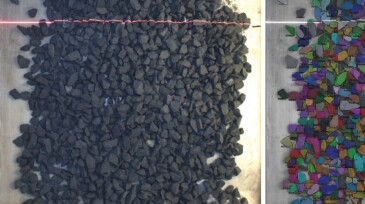
This paper proposes a holistic, automatic, and real-time characterization of cuttings/cavings, including their volume, size distribution, and shape/morphology, while integrating 3D data with high-resolution images to pursue this objective for use in the real-time assessment of hole cleaning sufficiency and wellbore stability and, consequently, for the prediction, prev…
-
Collaboration and technology will help the industry meet its toughest challenges, experts said during the opening session at ATCE.
-
In this exclusive Q&A, Giovanni Cristofoli, senior vice president of bp Solutions, shares insights into how his team is redefining operational strategies and fostering agility to bridge competitive gaps and enhance efficiency. Highlights include the integration of digital tools, data science, and a unified approach to tackling complex problems.
-
Accuracy, complexity, costs, and skills availability may make it difficult to get the most out of digital twins and even potentially misrepresent or miss actual changes in the status of systems or facilities.
-
The new contract extends a decadelong relationship and expands the use of AI and digital twins.
-
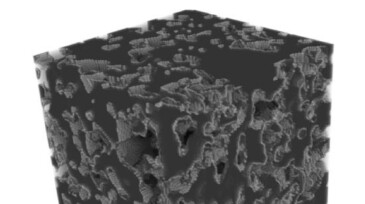
This paper presents a novel modeling framework for predicting residual oil saturation in carbonate rocks. The proposed framework uses supervised machine learning models trained on data generated by pore-scale simulations and aims to supplement conventional coreflooding tests or serve as a tool for rapid residual oil saturation evaluation of a reservoir.
-
The main objective of this paper is to provide a solution that eliminates the risks of working in confined spaces and aids in preventive maintenance.