Data & Analytics

This research focuses on combining physics-based expert rules with machine learning to improve the detection of failure-related events in electrical submersible pumps.

A combination of physics principles and machine-learning techniques is used in this work to develop a virtual flowmeter for oil-production optimization in electrical-submersible-pump-lifted oil wells, resulting in reliable generalization.

This paper presents the deployment of an artificial intelligence-enabled autonomous gas lift optimization system, integrating real-time centralized advanced process control with cloud-based analytics to enhance artificial gas lift performance in producer wells.
-
 The use of oil-based muds has precluded countless drill cuttings from being used to predict reservoir fluids despite once being part of the reservoir. A 6-decade-old technology may be on the cusp of changing that.
 -
From the first supercomputer to generative AI, JPT has followed the advancement of digital technology in the petroleum industry. As the steady march of innovation continues, four experts give their views on the state and future of data science in the industry.
-
The act aims to create safeguards around general purpose artificial intelligence, limit the use of biometric identification systems by law enforcement, and ban social scoring the untargeted scraping of facial images from CCTV footage to create facial recognition databases.
-
More than two dozen artificial intelligence systems are being celebrated for delivering massive value to the national oil company.
-
The company says it has used more than 30 AI tools to unlocked significant value across its full value chain.
-
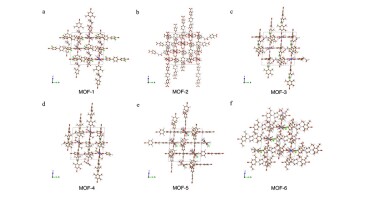
Artificial intelligence is increasingly being used to assist in the development of materials, including metal-organic frameworks (MOFs), to advance carbon capture technologies. Researchers assembled more than 120,000 new MOF candidates within 30 minutes.
-
Early adopters of large language models praise the technology’s promise to advance upstream research and software development while also offering cautionary notes.
-
This paper presents an approach using artificial neural networks to predict the discharge pressure of electrical submersible pumps.
-
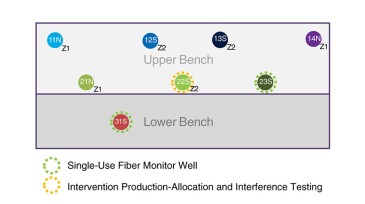
The authors integrated azimuths and intensities recorded by fiber optics and compared them with post-flowback production-allocation and interference testing to identify areas of conductive fractures and offset-well communication.
-
Devon Energy along with petroleum engineering consulting and software firm Whitson and cloud computing company Snowflake developed a system to monitor the dynamics of 5,000 wells.