Data & Analytics

Switching from continuous circulation to cyclic huff-‘n’-puff operation in enhanced geothermal systems can significantly delay thermal breakthrough, sustain higher production temperatures, and improve long-term economic performance.

The two companies say they plan to work together to use agentic AI to increase the capabilities of technical experts.

This article is the first in a Q&A series from the SPE Methane Emissions Management Technical Section (MEMTS) on methane intelligence and how oil and gas teams translate emissions data into credible decisions and measurable reductions.
-
 A recently signed contract lines the company up to provide autonomous ocean robots for inspection of the oil giant’s subsea field developments in the Gulf of Mexico.
 -
This article explains what deep learning is and how it works and presents an example use case from the energy industry.
-
SponsoredHow are upstream operators setting their geoscience teams up for success? Which data management capabilities are most important? And which geo data challenges are outstanding? These questions and others are answered in a report by the industry analysts IDC, based on a survey of industry participants.
-
This paper examines how connected technology can help streamline safety processes and improve worksite efficiency.
-
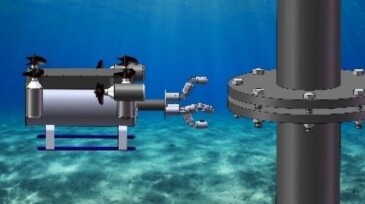
The technology now in development at UH consists of remotely operated vehicles equipped with multiple sensors, video cameras, and scanning sonars that can swim along a subsea pipeline to inspect flange bolts.
-
The agreement will put SLB’s Delfi software to work in Ineos’ oil and gas operations.
-
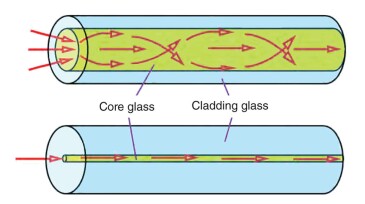
This paper presents a comprehensive technical review of applications of distributed acoustic sensing.
-
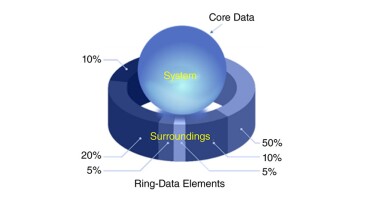
The authors of this paper describe a technology built on a causation-based artificial intelligence framework designed to forewarn complex, hard-to-detect state changes in chemical, biological, and geological systems.
-
This paper presents a family of machine-learning-based reduced-order models trained on rigorous first-principle thermodynamic simulation results to extract physicochemical properties.
-
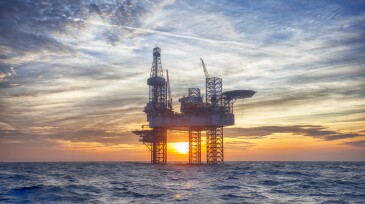
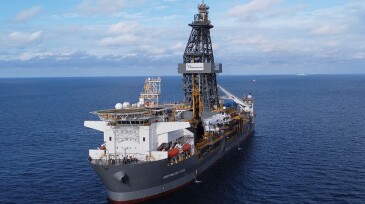
The heated global floating rig market has day rates for high-end units climbing over a half million dollars and toward a newbuild cycle that will (likely) never come.