Data & Analytics

A combination of physics principles and machine-learning techniques is used in this work to develop a virtual flowmeter for oil-production optimization in electrical-submersible-pump-lifted oil wells, resulting in reliable generalization.

After years of market shocks, technological breakthroughs, and rising uncertainty, ATCE 2026 will provide new insights on how industry leaders and technical experts are preparing for the next era of the upstream business.

This research focuses on combining physics-based expert rules with machine learning to improve the detection of failure-related events in electrical submersible pumps.
-
 The need to understand the future trends of the oil industry has never been greater than it is today.
 -
In this study, the authors investigated a fully data-driven approach using artificial neural networks (ANNs) for real-time virtual flowmetering and back-allocation in production wells.
-
The authors detail the development of a technique based on surface-to-borehole controlled-source electromagnetics (CSEM), which exploits the large contrast in resistivity between injected water and oil to derive 3D resistivity distributions, proportional to saturations, in the reservoir.
-
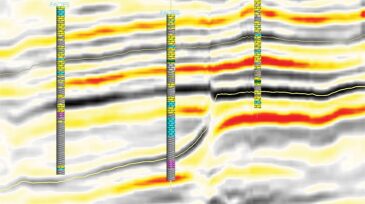
This paper discusses a project with the objective of leveraging prestack and poststack seismic data in order to reconstruct 3D images of thin, discontinuous, oil-filled packstone pay facies of the Upper and Lower Wolfcamp formation.
-
In this paper, the authors describe a project to design, field trial, and qualify an alternative solution for real-time monitoring of the oil rim in carbonate reservoirs that overcomes these disadvantages.
-
This industry is one often considered reactive and overly tradition-bound. These new technologies, however—and, more importantly, the drive of these researchers to harness their capabilities—prove that petroleum engineers remain at the forefront of innovation and discovery.
-
While the visual element is key, the core strategic component of data visualization is the ability to unlock the story in the data.
-
Instinctively, we feel that greater accuracy is better and all else should be subjected to this overriding goal. This is not so. While there are a few tasks for which a change in the second decimal place in accuracy might actually matter, for most tasks, this improvement will be irrelevant.
-
The ecosystem in which an algorithm must live in order to deliver value must be viewed as a whole. The algorithm can be viewed like a car’s engine. It’s rather important, but it’s not a car yet.
-
Digitalization leads oil and gas research and development investment priorities, according to DNV’s 2019 annual outlook.