Data & Analytics

Switching from continuous circulation to cyclic huff-‘n’-puff operation in enhanced geothermal systems can significantly delay thermal breakthrough, sustain higher production temperatures, and improve long-term economic performance.
The two companies say they plan to work together to use agentic AI to increase the capabilities of technical experts.

This article is the first in a Q&A series from the SPE Methane Emissions Management Technical Section (MEMTS) on methane intelligence and how oil and gas teams translate emissions data into credible decisions and measurable reductions.
-
 Methods inspired by artificial intelligence and software development help generate more ideas that add more value.
 -
Feeding better battery storage with the energy produced by cleaner sources such as solar panels and wind turbines is not a new idea. But are good ideas enough? Or could AI be the answer to unlocking the true value of the next generation of solar and energy innovations?
-
This paper shares details of 2 years of monitoring the first commingled updip smart water injector drilled in the Piltun area of the Piltun-Astokhskoye offshore oil and gas field.
-
A consortium of 20 organizations, REX-CO2, including research institutions, operators, and regulatory authorities, studied mature wells in two areas of the UK Continental Shelf. Subsurface data were evaluated and verified the wells’ potential suitability for both reuse and CO2 injection and storage.
-
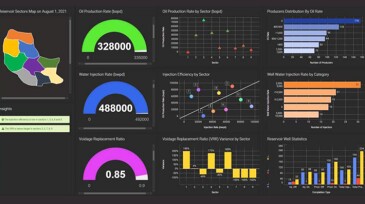
This paper discusses a waterflood optimization system that provides monitoring and surveillance dashboards with artificial-intelligence and machine-learning components to generate and assess insights into waterflood operational efficiency.
-
At the company’s annual conference, leaders from its Automations Solutions business laid out a three-pronged effort to improve automation architecture—intelligent fields, the edge, and the cloud.
-
So far, digital twins have focused mainly on mimicking small, well-defined systems. Integrated asset models, however, tend to address the bigger picture. In this video, Distinguished Lecturer Kristian Mogensen addresses whether we can take the best from both worlds, whether we need to, and how to go about developing such a technical solution.
-
SponsoredWhy oil and gas companies can’t get the data they need for production optimization (and how to change that).
-
New research led by the University of Glasgow’s School of Psychology and Neuroscience presents an approach to understand whether the human brain and deep neural networks recognize things in the same way.
-
As we continue to reduce our reliance on fossil fuels, we risk becoming more vulnerable if we don’t start associating climate resiliency with cyber resiliency.