

Data mining/analysis

This case study presents the first field deployment of acoustic fracturing analysis to evaluate perforation efficiency and implement real-time interventions during pressure pumping.

This paper introduces in-pipe inspection technologies enabling high-resolution digital measurements of tubular internal diameter and wall thickness for critical downhole applications.

This paper describes an approach to creating a digital, interconnected workspace that aligns sensor data with operational context to place the completions engineer back into a central role.
-
 The use of intelligent software is on the rise in the industry and it is changing how engineers approach problems. A series of articles explores the potential benefits and limitations of this emerging area of data science.
 -
The use of intelligent software is on the rise in the industry and it is changing how engineers approach problems. A series of articles explores the potential benefits and limitations of this emerging area of data science.
-
At the 2016 Gulf of Mexico Deepwater Technical Symposium in New Orleans, a presentation discussed the application of sensors and analytics in pipeline integrity management systems.
-
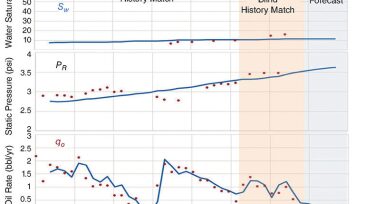
Young Technology Showcase—Top-Down Modeling: A Shift in Building Full-Field Models for Mature FieldsData-driven, or top-down, modeling uses machine learning and data mining to develop reservoir models based on measurements, rather than solutions of governing equations.
-
Well control is built around huge steel machines, but the future of the business is digital. Data have become a critical asset as operators and service companies work to increase the safety and reliability of their products and operations.
-
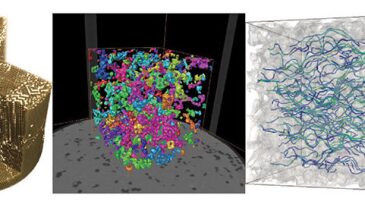
In an effort to foster collaboration in an area where there is currently very little, researchers at the University of Texas at Austin (UT) created a new web-based application for storing and sharing CT images of rocks.
-
A data-driven approach to successfully analyze and evaluate production-fluid impact during facility system divert events is presented. The work flow effectively identifies opportunities for prompt event mitigation and system optimization.
-
The big data approach will allow new types of data-driven models to bypass traditional bottlenecks. It is also expected to lead to different views of standard models, thus providing new and valuable insights in the process.
-
There is a lot of information buried in drilling reports written every day, but little of it appears in computer databases.
-
There is talk about digital oil fields and big data and some striking examples of their power. But in real oil fields, a lot of operators are still running fields with systems relying on big paper.






Page 15 of 16