Decarbonization

Winners of Alberta's Drilling Technology Challenge cover a range of technologies from robotics to enhance drilling rig safety to AI-enabled energy management, downhole sensing, well navigation, hybrid power systems, and geothermal energy.

Located along the North Sea, the Humber is expected to play a central role in the UK’s effort to achieve a net-zero emissions status by 2050.

The firm’s latest analysis puts the bulk of the blame on a fragmented supply chain.
-
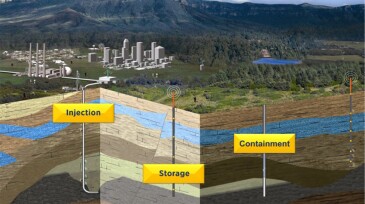
 The 2025 update to SPE’s CO₂ Storage Resources Management System (SRMS) is now available. Following a 2-year review, the updated framework—endorsed by six professional societies—builds on the original 2017 system to support consistent classification, evaluation, and reporting of CO₂ storage resources. A key change in the 2025 SRMS Update is the inclusion of CO₂ EOR as…
 -
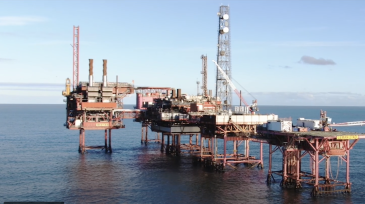
The UK North Sea Transition Authority has awarded the required permits for the East Irish Sea project, and the project has reached financial close. The carbon capture and storage project is expected to receive its first carbon dioxide in 2028.
-
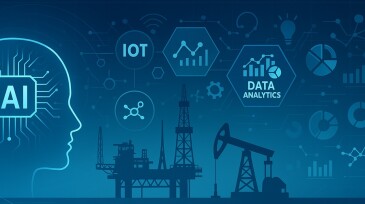
The full potential of data can only be realized when it is viewed not in isolation but as part of the dynamic triad of hydrocarbons, the data, and the people who interpret it and act on it.
-
The meeting of leaders, experts, and stakeholders emphasized the urgency of addressing greenhouse-gas emissions to mitigate climate change and align with global sustainability goals.
-
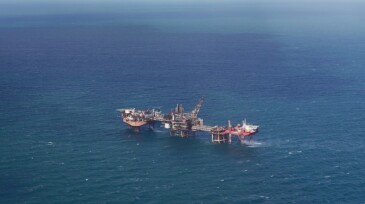
The test marks a milestone in the Poseidon CCS project, which aims to store carbon dioxide in the depleted gas reservoir below the Leman development in the southern North Sea.
-
The storage permits, the first of their kind, allow the Stratos facility to move forward with plans to capture and store up to 500,000 tonnes of carbon dioxide per year.
-
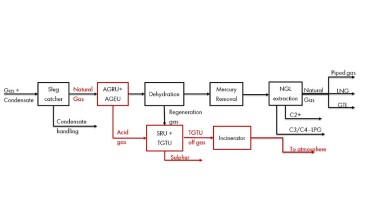
This paper aims to provide insights to address the challenge of identifying the optimal point within the gas-processing lineup for recovering a high-purity CO₂ stream suitable for sequestration.
-
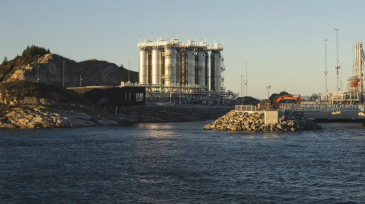
The first phase of the Norwegian project is expected to receive its first carbon dioxide this year, with the second phase slated to start operations in late 2028.
-
This paper introduces a novel optimization framework to address CO2 injection strategies under geomechanical risks using a Fourier neural operator-based deep-learning model.
-
The agreement aims to bring the efforts of both companies together to advance digital-enabled carbon-free floating power generation.