Decarbonization

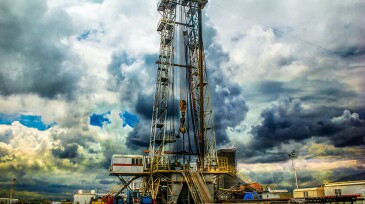
Winners of Alberta's Drilling Technology Challenge cover a range of technologies from robotics to enhance drilling rig safety to AI-enabled energy management, downhole sensing, well navigation, hybrid power systems, and geothermal energy.

Located along the North Sea, the Humber is expected to play a central role in the UK’s effort to achieve a net-zero emissions status by 2050.

The firm’s latest analysis puts the bulk of the blame on a fragmented supply chain.
-
 The project will implement two distinct carbon technologies aimed at capturing and storing carbon dioxide. Svante’s CEO Claude Letourneau describes his company’s solid-sorbent technology used in collaboration with Climeworks, one of the awarded companies.
 -
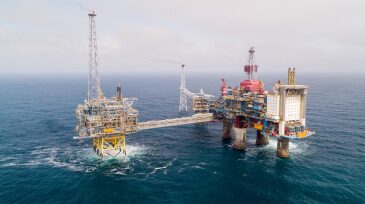
Electric conversion of these offshore platforms is expected to cut about 1.2 million tonnes of CO₂ emissions per year.
-
The US supermajor aims to speed the commercialization of a new liquid solvent that strips carbon dioxide from industrial flue gas.
-
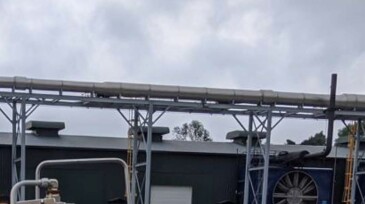
This paper describes a chemical-free process with a small footprint designed to capture exhaust from natural gas drive compressors and supporting gas-fueled production equipment.
-
Jim Gable, president of Chevron Technology Ventures, shares how CTV works with startups and how their technologies go big.
-
The partnership seeks to shift the economics of carbon capture across high-emitting industrial sectors.
-
ExxonMobil and Aramco CEOs talk molecules, electrons, and the need to "abandon the fantasy of phasing out oil and gas" at the "Super Bowl of Energy" in Houston.
-
The two companies have formed an S-Hub consortium to evaluate and develop a cross-border carbon capture and storage project for reducing carbon dioxide emissions in Singapore.
-
This paper provides insights into the technical and economic viability of repurposing oil and gas wells for geothermal energy production for direct heating.
-
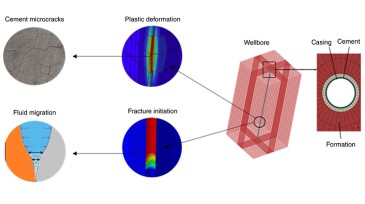
This paper discusses and evaluates retrofitting abandoned petroleum wells for geothermal applications as a commonly proposed solution to meet the challenge of the capital expenditure required for drilling and completion.