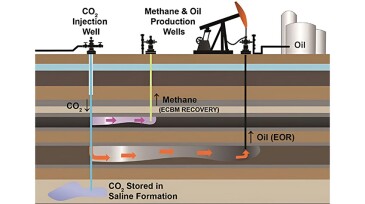
Decarbonization
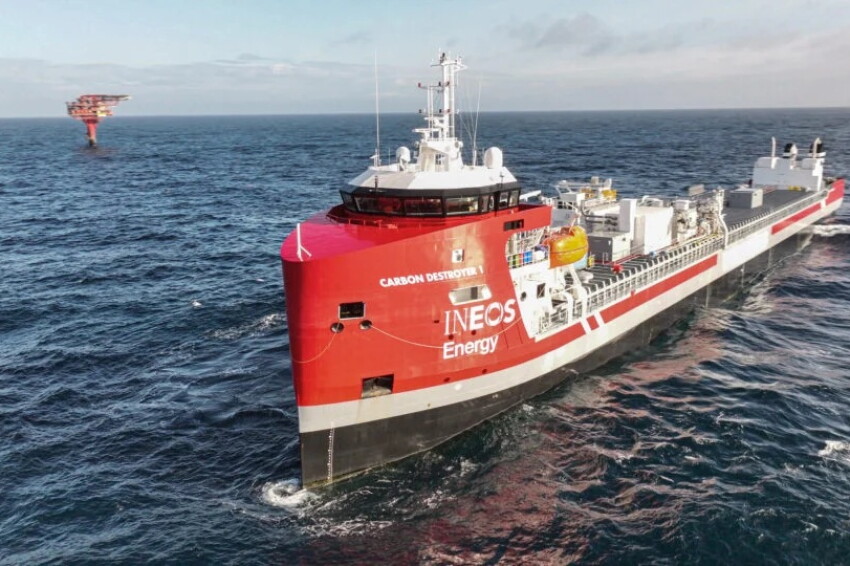
Plans call for the Greensand project to store 400,000 tonnes of carbon dioxide annually, with the potential to store up to 8 million tonnes annually at full capacity.
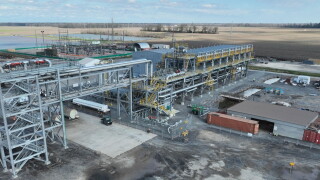
In line with its recently released Global Outlook, the major has begun storing carbon dioxide from Nucor’s iron facility in Convent, Louisiana.
Natural Resources Canada has awarded $4 million to Next Hydrogen and CERT Systems to advance clean hydrogen production and low-carbon sustainable aviation fuel technologies in the Greater Toronto Area.
-
 The updated joint development agreement allows the companies to carve out new markets while they complete pilot testing at a demonstration plant in the Netherlands.
 -
The project will implement two distinct carbon technologies aimed at capturing and storing carbon dioxide. Svante’s CEO Claude Letourneau describes his company’s solid-sorbent technology used in collaboration with Climeworks, one of the awarded companies.
-
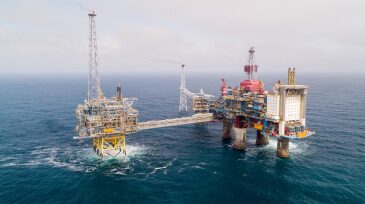
Electric conversion of these offshore platforms is expected to cut about 1.2 million tonnes of CO₂ emissions per year.
-
The US supermajor aims to speed the commercialization of a new liquid solvent that strips carbon dioxide from industrial flue gas.
-
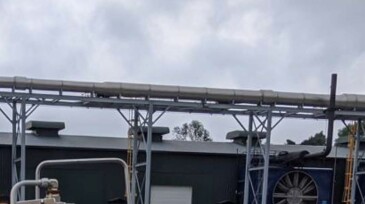
This paper describes a chemical-free process with a small footprint designed to capture exhaust from natural gas drive compressors and supporting gas-fueled production equipment.
-
Jim Gable, president of Chevron Technology Ventures, shares how CTV works with startups and how their technologies go big.
-
The partnership seeks to shift the economics of carbon capture across high-emitting industrial sectors.
-
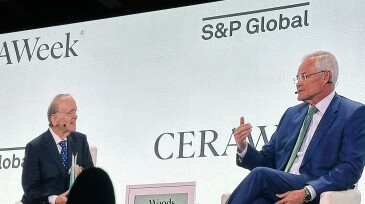
ExxonMobil and Aramco CEOs talk molecules, electrons, and the need to "abandon the fantasy of phasing out oil and gas" at the "Super Bowl of Energy" in Houston.
-
The two companies have formed an S-Hub consortium to evaluate and develop a cross-border carbon capture and storage project for reducing carbon dioxide emissions in Singapore.
-
The long, successful history of various metallurgies in EOR wells has been cited as sufficient to allow the same completions for CCS injection wells. The lack of actual data on the long-term performance of these alloys in EOR wells in combination with the more-stringent requirements for Class VI wells suggests otherwise.