Decarbonization
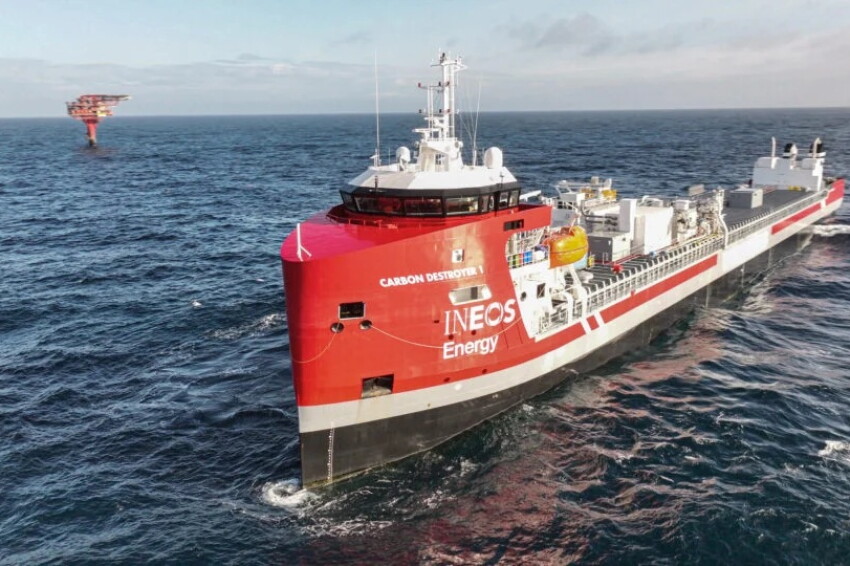
Plans call for the Greensand project to store 400,000 tonnes of carbon dioxide annually, with the potential to store up to 8 million tonnes annually at full capacity.
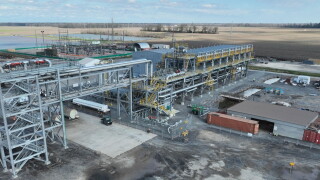
In line with its recently released Global Outlook, the major has begun storing carbon dioxide from Nucor’s iron facility in Convent, Louisiana.
Natural Resources Canada has awarded $4 million to Next Hydrogen and CERT Systems to advance clean hydrogen production and low-carbon sustainable aviation fuel technologies in the Greater Toronto Area.
-
 The firm’s latest analysis puts the bulk of the blame on a fragmented supply chain.
 -
Sustainable energy continues to grow as a focus for reliable, affordable, and secure energy as seen from the past year of papers reviewed for this feature. Three primary areas are being reported on heavily: carbon use for enhanced oil recovery, geological hydrogen discovery, and critical minerals from the subsurface.
-
This paper explores the development of direct-lithium-extraction technologies designed to recover lithium from unconventional feedstocks.
-
The US federal government is working to stymie offshore wind power, but proponents aren’t going quietly. Armed with data, they are taking on a sea of misinformation and hostility to defend the burgeoning resource in the US, while the rest of the world moves ahead briskly.
-
This work describes a study in which distributed data parallel training, paired with a node-local caching pipeline, enabled efficient multigraphics-processing-unit scaling for a CO₂-storage graph-neural-network surrogate while maintaining generalization.
-
This work uses a novel pseudosteady-state-based simulation to reduce training-data-generation cost while maintaining high-performance predictions of data-driven proxy models for carbon-sequestration projects.
-
This study aims to systematically assess casing integrity and corrosion risks associated with CO2 injection in oil-recovery operations.
-
This study applies Monte Carlo simulation and an XGBoost regression model to assess the influence of various formations, geologic provinces, tectonic-plate types, and boundary conditions on hydrogen concentrations.
-
A new Xodus report finds that scaling CCS across Europe will require significant investment in dedicated CO2 shipping, port infrastructure, and hybrid transport systems—projecting a fleet of about 65 vessels, 33 ports, and rapidly increasing emissions transport by 2050.
-
The California Resources Corporation achieved the state’s first carbon dioxide injection into two depleted reservoirs with the potential to store 38 million tonnes.