Decarbonization
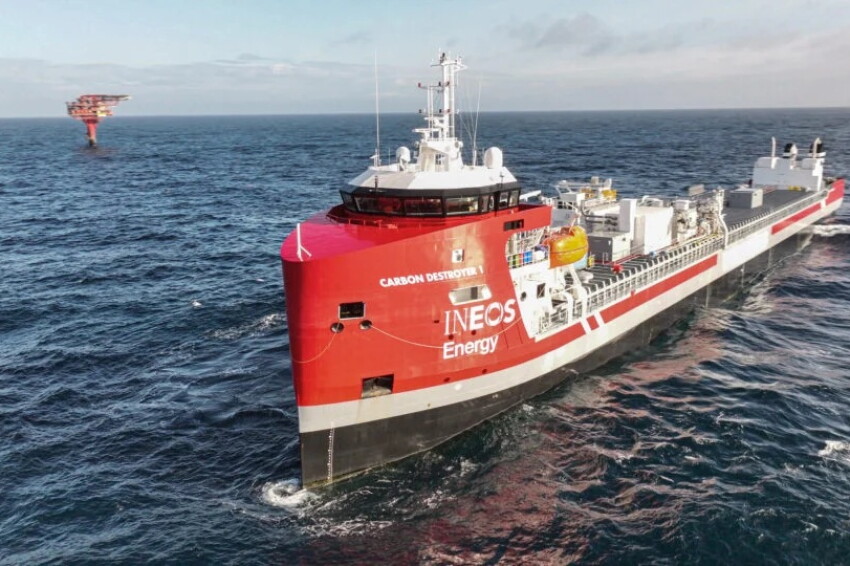
Plans call for the Greensand project to store 400,000 tonnes of carbon dioxide annually, with the potential to store up to 8 million tonnes annually at full capacity.
In line with its recently released Global Outlook, the major has begun storing carbon dioxide from Nucor’s iron facility in Convent, Louisiana.
Natural Resources Canada has awarded $4 million to Next Hydrogen and CERT Systems to advance clean hydrogen production and low-carbon sustainable aviation fuel technologies in the Greater Toronto Area.
-
 At a time when there are many models vying to be the one used to evaluate and plan carbon storage sites, the US Department of Energy wants to test one developed by SPE members.
 -
A critical challenge for those designing carbon dioxide storage sites is predicting where the injected gas will go. One of the only sure bets is to assume that any model of a gas plume that looks symmetrical is likely wrong.
-
ADNOC lays out a $15-billion installment in its long-term plan to reduce its carbon footprint.
-
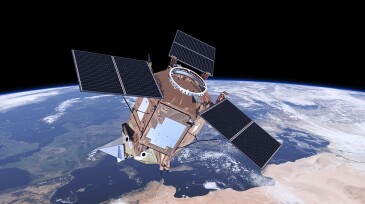
Satellite imaging of methane emissions offers the fossil fuel industry the empirical data it needs to fix problems that companies might not even know they have before the EPA starts to levy fines in 2024.
-
Oil and gas companies play important roles in the global push for energy security and carbon reduction. Here’s how they can excel at both.
-
The authors of this paper describe a three-way coupled modeling approach that integrates dynamic, geochemistry, and geomechanics models to obtain cumulative effects of all three changes to evaluate future carbon dioxide storage.
-
The authors of this paper investigate the risk of containment loss for a leaking well using a 1-sq-mile section of the Denver-Julesburg Basin.
-
This study evaluates well integrity and CO2-leakage risk in wells penetrating a CO2 storage reservoir in Malaysia.
-
This paper presents results from evaluating the rate of thermal energy that can be extracted under various completion scenarios in end-of-life oil and gas wells using a transient flow simulator.
-
Denbury acquires carbon-storage land in the South, Baker Hughes forms a new wells consortium, and Chevron and BP expand their investments. Hydrogen takes center stage across the globe, while the international energy transition makes strides toward its goals.