Decarbonization

This paper presents a flexible, highly cost- and energy-efficient method of gas separation and CO₂ capture from many different gas mixtures with a large range of CO₂ concentrations.

This study explores the carbon-capture and mineralization potential of ultramafic rock powders when exposed to flue gases generated from combustion of crude oil and mesquite-derived charcoal.

This paper presents an approach for safe, efficient, and cost-effective legacy well reabandonment.
-
 Australia’s Ichthys LNG facility will provide feedstock, along with production from legacy Japanese gas fields that will also serve as repositories for CO2 storage.
 -
The institute is tasked with accelerating the deployment and scaling of cost-effective climate technology.
-
Ineos, the day-to-day operator of Greensand Future, with its partners Harbour Energy and Nordsøfonden, has made a final investment decision into the first commercial phase, with storage operations set to begin by early 2026.
-
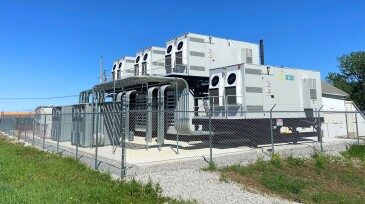
The drilling contractor is spending big to deploy natural-gas-powered microgrids and battery storage.
-
Permits for the East Side Cluster carbon storage project have been awarded, and participants have begun announcing final investment decisions.
-
The upstream oil and gas sector alone could cut as much as 4% of global greenhouse-gas emissions, according to a report from McKinsey. But this will take worldwide cooperation among industry players and capital investors.
-
Sharing state-of-the-art design and troubleshooting methods, the workshop identified future separation needs and gap statements and proposed how to close the gaps.
-
This paper examines the economics of carbon capture, usage, and storage projects, either standalone or in conjunction with large offshore gas projects, in Denmark, Indonesia, and Australia.
-
This paper describes the development of guidelines to determine the most suitable corrosion-resistant alloys for downhole injection equipment in wells for carbon capture and storage and carbon capture, use, and storage.
-
DNV has certified the feasibility of ADNOC’s West Aquifer carbon dioxide storage site in the UAE, marking a significant milestone in the Middle East’s carbon capture and storage efforts.