Digital Oil Field

The paper presents the design and successful field deployment of the first closed-loop hydraulic fracturing program.

The authors describe a study on key technologies for intelligent risk monitoring of workover operations.

The authors write that by replacing outdated, labor-intensive processes with an integrated, cloud-based platform, companies can streamline planning, improve accuracy, and foster better coordination across teams and vendors.
-
 Digital systems are helping ensure US independent Diversified Energy continues to grow and optimize production from its mature assets.
 -
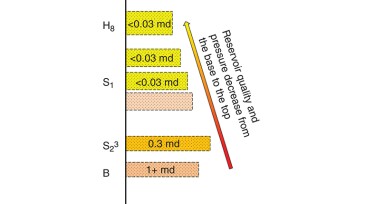
An automated detection application helped identify stringers early for an operator of a mature field in the North Sea while drilling multilateral wells through reservoir sections containing hard calcite stringers interspersed in sand formations with low unconfined compressive strength. The application guided drilling decisions that minimized invisible lost time and sh…
-
This paper describes a new intelligent dosing technology to reduce liquid loading in an unconventional tight gas reservoir.
-
Industry experts from Fugro analyze what the future holds for offshore energy fields and how the industry can embrace and prepare itself for an autonomous and digital future.
-
New automated technology is making it possible to run pressure pumps for days on end.
-
SponsoredWell-monitoring technology gives oil companies the data and insights to boost production and derive maximum value from oil and gas wells.
-
The Internet of Things company plans to broaden its reach into the oil and gas industry with its acquisition of Hiber.
-
The agreement will allow the Norwegian petroleum company to use FutureOn’s digital twin software for field development.
-
Technology continues to transform every aspect of our lives and its role in modernizing oilfield operations is no different.
-
This paper presents an oil well completion integrating multilaterals, intelligent completions, permanent downhole monitoring systems, electric submersible pump (ESP) and a horizontal wellhead system.