Digital Oil Field

The paper presents the design and successful field deployment of the first closed-loop hydraulic fracturing program.

The authors describe a study on key technologies for intelligent risk monitoring of workover operations.

The authors write that by replacing outdated, labor-intensive processes with an integrated, cloud-based platform, companies can streamline planning, improve accuracy, and foster better coordination across teams and vendors.
-
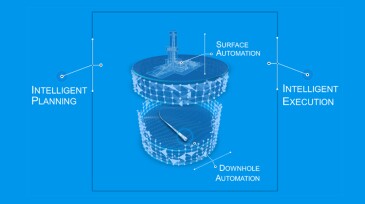
 The authors of this paper present an autonomous directional-drilling framework built on intelligent planning and execution capabilities and supported by surface and downhole automation technologies.
 -
The opening ceremony highlighted maximizing production sustainably to meet global demand, integration of simulation and optimization in a single platform with automation, and energy security.
-
The authors of this paper present a method of retrieving downhole data that is a practical and inexpensive alternative to wireline or slickline logging and permanently installed sensors.
-
Industry leaders are harnessing the power of data to improve efficiencies, eliminate nonproductive time, and reduce Capex.
-
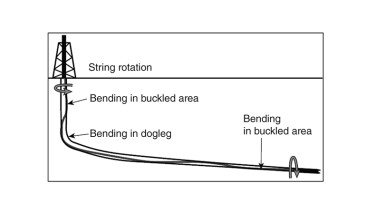
The authors discuss a study based on twistoffs experienced with bottomhole assembly components during drilling operations and provide recommendations for reduction or elimination of these incidents.
-
This paper shares details of 2 years of monitoring the first commingled updip smart water injector drilled in the Piltun area of the Piltun-Astokhskoye offshore oil and gas field.
-
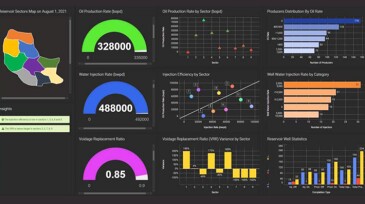
This paper discusses a waterflood optimization system that provides monitoring and surveillance dashboards with artificial-intelligence and machine-learning components to generate and assess insights into waterflood operational efficiency.
-
At the company’s annual conference, leaders from its Automations Solutions business laid out a three-pronged effort to improve automation architecture—intelligent fields, the edge, and the cloud.
-
So far, digital twins have focused mainly on mimicking small, well-defined systems. Integrated asset models, however, tend to address the bigger picture. In this video, Distinguished Lecturer Kristian Mogensen addresses whether we can take the best from both worlds, whether we need to, and how to go about developing such a technical solution.
-
SponsoredWhy oil and gas companies can’t get the data they need for production optimization (and how to change that).