Digital Oil Field

This research focuses on combining physics-based expert rules with machine learning to improve the detection of failure-related events in electrical submersible pumps.

A combination of physics principles and machine-learning techniques is used in this work to develop a virtual flowmeter for oil-production optimization in electrical-submersible-pump-lifted oil wells, resulting in reliable generalization.

This paper presents the deployment of an artificial intelligence-enabled autonomous gas lift optimization system, integrating real-time centralized advanced process control with cloud-based analytics to enhance artificial gas lift performance in producer wells.
-
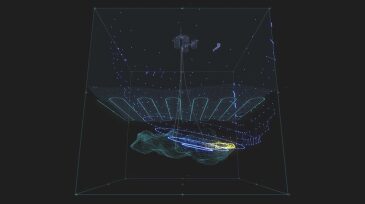
 The technology will provide Equinor a continual feed of updated reservoir information from its Johan Castberg and Johan Sverdrup fields with the aim of improving well placement, production, injection, and—ultimately—recovery.
 -
A new event is kicking off in September that will bring together the brightest minds in digital tech and oil and gas.
-
Harnessing stranded data will transform operations beyond what existing, siloed software solutions delivered. There is a clear need to be more agile and embrace cloud-based solutions to realize new capabilities.
-
The goal is to support the development and sharing of best-practice approaches for project delivery and asset operations using cloud services and digital workflows in engineering and operations.
-
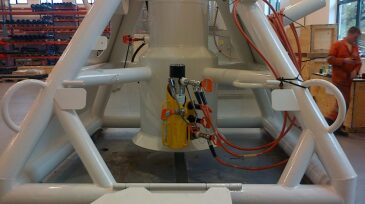
Acquiring data from an abandoned subsea well has been done before, but never quite like this.
-
Wearable computers are turning heads in the oil and gas industry and appear to be on a trajectory for widespread adoption.
-
What I find impressive is the number of people who were hiding in normal discipline jobs who are coming out of the closet with their Python scripts. And, it’s working. In many ways, order is coming to the mess, efficiency is coming to tiresome manual activities, and richness is coming to decisions.
-
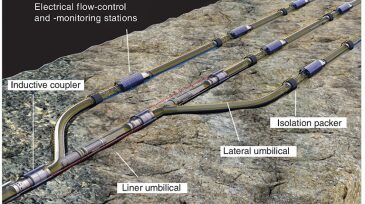
A producer and a service company have collaborated to develop a downhole system to merge multilateral technology and intelligent completions to create “smart laterals.”
-
The authors present a new data-driven approach to estimate the injection rate in all noninstrumented wells in a large waterflooding operation accurately.
-
Since the first intelligent completion was installed 20 years ago, the systems have become increasingly complex in order to reach productivity and optimization goals, allowing real-time independent monitoring and management of each zone in the well.