Digital Oil Field

The paper presents the design and successful field deployment of the first closed-loop hydraulic fracturing program.

The authors describe a study on key technologies for intelligent risk monitoring of workover operations.

The authors write that by replacing outdated, labor-intensive processes with an integrated, cloud-based platform, companies can streamline planning, improve accuracy, and foster better coordination across teams and vendors.
-
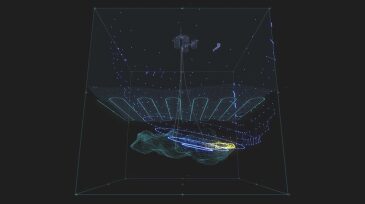
 “Greedy pursuit” in the realm of algorithms is a good thing. Saudi Aramco studied such algorithms to produce images simulating the flow inside a pipe’s cross section, possibly reducing the need for separator-based multiphase flowmeters.
 -
Predicting the trajectory of a satellite, or a well, requires sophisticated analysis to reduce the huge uncertainties. That adds to the many things drillers should be thinking about, which can be overwhelming.
-
These days, it is all about digital. Click to find out what industry leaders from Encana, Google, Schlumberger, and Shell have to say about the ongoing transformation towards data-driven profitability.
-
The data collected via monitoring and metering applications are increasingly viewed as central to assessing production performance and in decision making to optimize field development and operations.
-
Having blockchain on an oil rig means everyone on the job shares a view of a project from start to finish. This could facilitate innovations that cut costs, but organizational change is required.
-
In this paper, the authors propose a coupled wellbore/reservoir model that performs dynamic nodal analysis using integrated models for surface-facilities, wellbore, and reservoir simulators and allows an operator to select choke sizes as a function of time.
-
The objective of this paper is to illustrate a methodology for identifying the value of information (VOI) in reservoir management—in particular, for deriving the conditional probabilities of success when new and imperfect data are acquired.
-
Initial development of inflow tracers was designed to provide qualitative information about the location of water breakthrough in production wells. The proof of concept and application for water detection initiated the development of oil tracers for oil-inflow monitoring.
-
The technology will provide Equinor a continual feed of updated reservoir information from its Johan Castberg and Johan Sverdrup fields with the aim of improving well placement, production, injection, and—ultimately—recovery.
-
A new event is kicking off in September that will bring together the brightest minds in digital tech and oil and gas.