

Drilling/completion fluids

Adequate consideration must be given to the potential effect of each fluid on the successive phase operations to ensure integrated well-fluids system management.

This paper presents the methodology for developing drill-in organophilic clay-free invert-emulsion-fluid technology that enhances well production through fundamental geological studies and fluid testing.

This paper presents the large-scale deployment and operational integration of an advanced, automated rheometer in the Ghawar gas field, one of the world’s most prolific and technically complex hydrocarbon developments.
-
 This paper discusses the successful execution of two openhole gravel-pack completions in two Gulf of Mexico fields with depleted reservoirs.
-
As unconventional hydraulic fracturing matures, completions practices shift from art to engineering best practices.
-
This paper establishes that the use of a dual-gradient fluid column during the running of large casing in an extreme-reach deepwater well is an effective method to overcome drag and enable the casing to reach total depth.
-
In this paper, a case study is described in which a software solution enabled prescriptive optimization of well delivery using a physics-informed machine-learning approach for predictive identification and characterization of well-construction risks.
-
Two critical facets of the discipline of well control and wellbore integrity—decarbonization and groundbreaking automation of essential processes—are highlighted in the three primary paper selections presented at SPE and SPE-affiliated conferences during the past year.
-
This research aims to develop a fluid-advisory system that provides recommendations for optimal amounts of chemical additives needed to maintain desired fluid properties in various drilling-fluid systems.
-
This paper describes development of a high-temperature water-based reservoir drill-in fluid using a novel synthetic polymer and customized with optimal chemical concentrations and sized calcium carbonate.
-
In this case study, a geomechanics-based approach was used to create bridging and sealing at the fracture aperture using a biparticle self-degradable lost-circulation-fluid system.
-
One major challenge for drilling-fluid engineers is the design and management of optimal drilling-fluid formulations in emerging frontiers—fractured formations and high-pressure geothermal environments. Recently, operators have leveraged cutting-edge technology such as machine learning and expanded data-driven techniques to facilitate the development of new drilling-f…
-
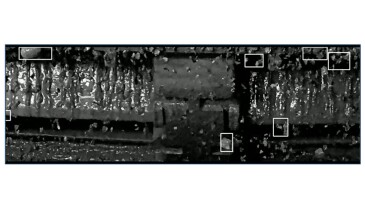
This paper describes an experimentation trial deploying and operating a computer-vision system on a deepwater rig to measure drilled cuttings in real time using a remotely monitored camera system.


Page 1 of 11