Drilling/completion fluids

This paper presents the application of degradable particulate-diverter technology to improve oil production by effectively diverting stimulation treatment fluids away from high-water-cut, high-permeability, high-temperature producing intervals or zones.

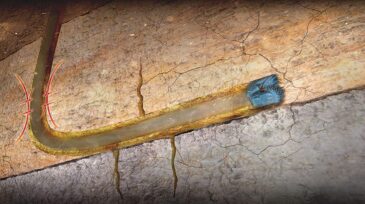
This paper presents the methodology for developing drill-in organophilic clay-free invert-emulsion-fluid technology that enhances well production through fundamental geological studies and fluid testing.

This paper presents the large-scale deployment and operational integration of an advanced, automated rheometer in the Ghawar gas field, one of the world’s most prolific and technically complex hydrocarbon developments.
-
 This paper presents experimental research in which a significant fracture-pressure increase was achieved in shale and the predominant wellbore strenghtening mechanism was identified.
-
The strength and conductivity of proppant packs are key parameters for assessing their performance. This paper introduces a new analysis technique based on interpretation of acoustic measurements to quantify mechanical damage in propping agents.
-
Technology developers are working on a new ultrasonic flowmeter for drilling fluids aimed at obtaining better measurements than current systems with far fewer disruptions to rig systems.
-
Making hole has become a more difficult and complex operation as operators move into untapped horizons, especially deepwater and unconventional fields.
-
This paper discusses the laboratory evaluation of potential high-pressure/high-temperature (HP/HT) drilling-fluid designs considered for a deep gas exploration well in Malaysia.
-
Mutual understanding and respect when universities collaborate with industry is crucial. A clear policy on harmonizing innovation and higher education should be created. However, caution must be taken not to have a one-size-fits-all approach.
-
This paper describes the first application of clay-free IEFs in the Norwegian continental shelf (NCS), with an emphasis on an impressively low and consistent ECD contribution.
-
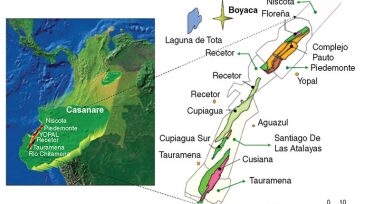
This paper describes the evaluation of a nanofluid containing nanomaterials with high adsorption capacity used for asphaltene inhibition in the volatile Cupiagua Sur oil field in Colombia.
-
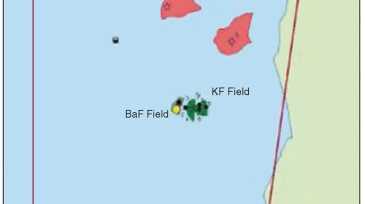
Historically, invert-emulsion drilling fluids are the preferred system for drilling offshore Cameroon. However, with a regulatory environment moving toward zero discharge, associated costs are rising.
-
This year has been a great year for me; I was able to play more rounds of golf than expected! I was also successful in sealing a few research collaboration agreements within the oil and gas industry.