Drilling

This paper aims to establish a set of best practices for generating particle-size-distribution data from core samples.

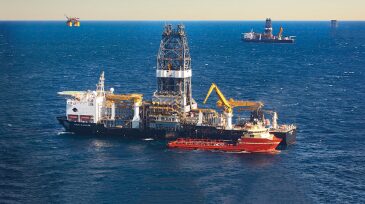
This paper discusses the successful execution of two openhole gravel-pack completions in two Gulf of Mexico fields with depleted reservoirs.

This edition highlights three offshore technology papers that address a common industry theme: how targeted engineering solutions can reduce uncertainty, shorten operations, and make technically constrained offshore well activities more executable.
-
 The benchmark comes as operator Eni solidifies concession agreements and ramps up exploration and development in the North African country.
 -
This paper proposes a metric for quantifying drilling efficiency and drilling optimization that is computed by use of a Bayesian network.
-
Signs of maturity in drilling systems automation are evident in the success stories filtering out of technical conferences and in the attraction of top university talent to an annual, international, drilling-systems-automation contest.
-
Having blockchain on an oil rig means everyone on the job shares a view of a project from start to finish. This could facilitate innovations that cut costs, but organizational change is required.
-
A real-time drilling-data analysis and recommendation system that leverages surface drilling data was deployed in a lateral section of a well from an artificial island in Abu Dhabi.
-
This work presents a systematic geosteering work flow that automatically integrates a priori information and real-time measurements to update geomodels with uncertainties and uses the latest model predictions in a decision-support system (DSS).
-
A marked change from a decade ago, Appalachia, the Permian, and the Haynesville now represent almost half of total US gas production, EIA reports.
-
A new report shows a 16% increase fueled by longer lateral lengths and horizontal drilling activity out of the Permian Basin. Continued gains in these areas should bode well for the future, but other factors may play into the market’s performance.
-
Shale explorers run very few logs into horizontal wells, making it difficult to understand the effects of reservoir depletion in tightly spaced wells. This new technology is trying to change that.
-
Range Resources' drilling head talks about how the company went from drilling the shortest laterals in the Marcellus to the longest and why.