Drilling

This paper aims to establish a set of best practices for generating particle-size-distribution data from core samples.

This paper discusses the successful execution of two openhole gravel-pack completions in two Gulf of Mexico fields with depleted reservoirs.

A shared digital mindset across subsurface, subsea, and drilling and wells is accelerating well planning at Vår Energi.
-
 Automated particle-size analyzers are something you will not see on most drilling rigs, but some think this outside-the-oil-field technology will play a big role in the future of the drilling sector.
 -
This work demonstrates cement design that includes evaluating cement-sheath mechanical integrity in intercalated salts.
-
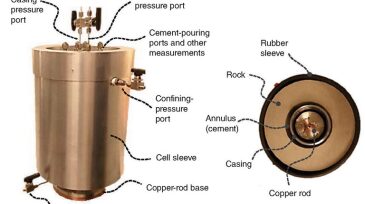
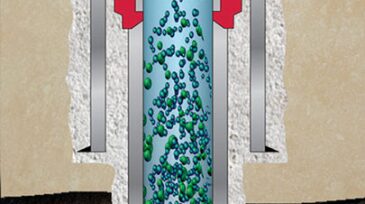
Operators in the North Sea have been concerned about the ability of the cement sheath to maintain sealing integrity because of the increasing number of reported failures in mature wells. This paper presents results from a new laboratory setup to visualize the source of issues.
-
Many wells in the Cana-Woodford shale suffer from chronic sustained casing pressure (SCP) because of poor cement-sheath bonding.
-
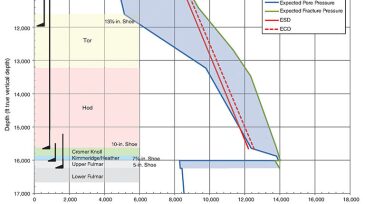
The Shearwater field is a deep, high-pressure/high-temperature (HP/HT) reservoir located in the UK Central Graben of the North Sea.
-
The operator of an offshore jackup rig in the North Sea required safe and efficient deployment of the completion string without killing the well during tripping.
-
Many of us work in strong functional environments, where all too easily we can deploy solutions that have the potential for repercussions on other aspects of well design, construction, completion, and performance.
-
What is observed when an unconventional well is fractured is often at odds with what was expected by those who planned the job.
-
A pilot project carried out by Hess demonstrates how quickly automated drilling technology is able to take a rig from the bottom of the pack in terms of performance and push it to the top.
-
This paper focuses on experimental methods quantifying water-based muds and investigating effects on particle bridging, filtrate invasion, and permeability.