Drilling

This edition highlights three offshore technology papers that address a common industry theme: how targeted engineering solutions can reduce uncertainty, shorten operations, and make technically constrained offshore well activities more executable.

This paper aims to establish a set of best practices for generating particle-size-distribution data from core samples.

This paper discusses the successful execution of two openhole gravel-pack completions in two Gulf of Mexico fields with depleted reservoirs.
-
 new drilling method provides a solution for challenges encountered in drilling of long horizontal wells, incorporating a dual drillstring with a separate channel for the return fluid from the well.
 -
The complete paper discusses the advancements in mud-displacement simulation that overcome the limitations of the previous-generation simulator and provide a more-realistic simulation in highly deviated and horizontal wells.
-
A supramolecular viscosifier package has been developed that uses noncovalent associations between additives to enhance the thermal resilience of divalent brine fluids.
-
If it has been proved in the past that innovative technology is excellent for bringing more-efficient solutions to reduce costs, will digital technology be the panacea for the whole industry?
-
The purpose of this paper is to demonstrate how inaccuracy in standard directional-surveying methods affects wellbore position and to recommend practices to improve surveying accuracy for greater confidence in lateral spacing.
-
AFGlobal acquired the Axon pressure pump technology and product line from Amkin Technologies, a privately held oilfield equipment and technology developer.
-
Money is the root all of startups, but getting it and making more of it depends on dealing with demanding people.
-
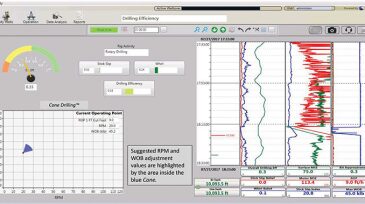
Researchers have developed a drilling-data-aggregation and -distribution system that seamlessly integrates all forms of data, file types, and communication protocols and incorporates human-factors engineering in the design.
-
The boom in organic shale plays has revealed the critical need to size hydraulic-facture treatments correctly to achieve commercial success.
-
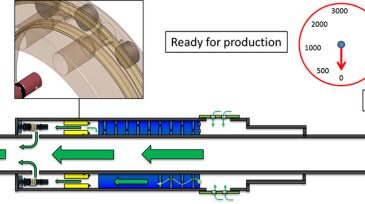
This paper discusses the first deployment of an ICD system combined with an OBC system for a workover operation in a mature producer well in the Kingdom of Saudi Arabia.