Drilling

This edition highlights three offshore technology papers that address a common industry theme: how targeted engineering solutions can reduce uncertainty, shorten operations, and make technically constrained offshore well activities more executable.

This paper aims to establish a set of best practices for generating particle-size-distribution data from core samples.

This paper discusses the successful execution of two openhole gravel-pack completions in two Gulf of Mexico fields with depleted reservoirs.
-
 The authors describe challenges that must be overcome to reach the goal of drilling systems automation.
 -
This paper details the introduction of a drilling automation system to deliver superior well-construction performance in a major gas field.
-
MPD was used to successfully drill through a pore pressure ramp and address a well-control event in conjunction with conventional methods.
-
Drilling automation and innovation continue as dominant trends despite market downturns and unprecedented challenges in the past year. In many ways, the drive toward new efficiencies and step changes in well-construction performance has taken on an even greater sense of urgency.
-
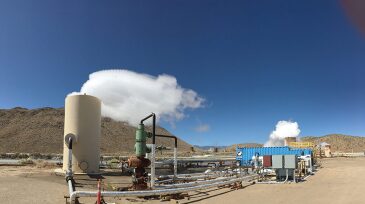
The cutting-edge technological developments in geothermal are devoted to drilling into deeper, hotter, and harder rock. Oil and gas expertise and know-how holds the key to cost reduction.
-
The complete paper discusses a geophone array, including four, three-component geophones deployed by wireline, that provides a solution for this problem by creating a 3D map of the acoustic environment.
-
The complete paper presents a solution that integrates a physics-based torque-and-drag (T&D) stiff/soft string model with a real-time drilling analytics system using a custom-built extract, transform, and load translator and digital-transformation applications to automate the T&D modeling work flow.
-
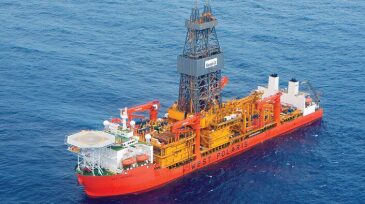
The London-based company is seeking to restructure more than $3 billion in debt as it struggles to find work for its offshore fleet.
-
The complete paper discusses a new performance-evaluation methodology that combines bottomhole assembly (BHA) modeling with field data.
-
The complete paper presents a methodology designed for optimally matching drill bits, mud motors, and bottomhole-assembly components for reduced failure risks and improved drilling performance.