Drilling

This paper aims to establish a set of best practices for generating particle-size-distribution data from core samples.

This paper discusses the successful execution of two openhole gravel-pack completions in two Gulf of Mexico fields with depleted reservoirs.

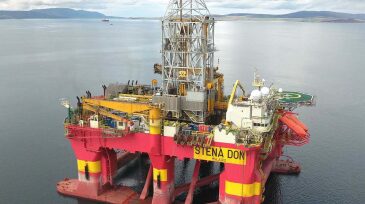
This edition highlights three offshore technology papers that address a common industry theme: how targeted engineering solutions can reduce uncertainty, shorten operations, and make technically constrained offshore well activities more executable.
-
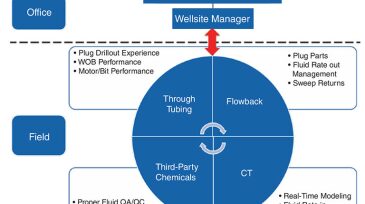
 This paper presents a factory-model approach to improving CT drillout performance that has been used successfully for more than 3 years and has become standard practice.
 -
The biggest drilling company appears interested in becoming the most innovative. It is testing inventions ranging from a blowout preventer that is not hydraulically powered to power systems designed like a hybrid car.
-
When a rig is stacked, its owner has two choices: spend millions to keep it in good shape, or let it rust out. These two companies describe what it is like to maintain their assets for the day that a contract comes.
-
Leaders from UK’s Oil and Gas Authority, Total, CNOOC, and Equinor discuss exploration successes, misses, and expectations for the offshore UK.
-
This paper describes challenges faced in a company’s first deepwater asset in Malaysia and the methods used to overcome these issues in the planning stage.
-
The oil industry is currently undergoing a technological transformation that will add value, improve processes, and reduce cost. Future drilling engineers will have knowledge of robotics, automation, and organizational efficiency, which is highly appealing for recruitment.
-
This paper discusses shale creep and other shale-deformation mechanisms and how an understanding of these can be used to activate shale that has not contacted the casing yet to form a well barrier.
-
Hydraulic isolation of wells drilled with nonaqueous fluids (NAFs) relies heavily on eliminating mud from the annuli before placing cement.
-
This paper demonstrates a new way to create gas-tight seals during well abandonment, overcoming the limitations of traditional methods and reducing the operator’s liability and potential environmental impact after decommissioning has been completed.
-
I am encouraged that we, as an industy, continue to refine and tweak our practices to solve zonal-isolation and cementing challenges in every well environment in which we work. As cementing techniques are improved, so, too, are the cement-evaluation methods and work flows.