Drilling

This paper aims to establish a set of best practices for generating particle-size-distribution data from core samples.

This paper discusses the successful execution of two openhole gravel-pack completions in two Gulf of Mexico fields with depleted reservoirs.

This edition highlights three offshore technology papers that address a common industry theme: how targeted engineering solutions can reduce uncertainty, shorten operations, and make technically constrained offshore well activities more executable.
-
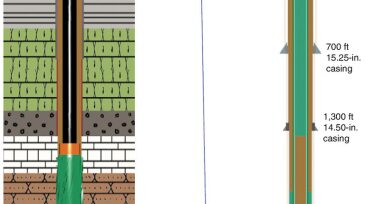
 Several different factors contributed to the Macondo accident, according to an analysis by the CSB.
 -
The full-field development plan for the Khazzan project in Oman is based on drilling approximately 300 wells targeting gas-producing horizons at measured depths of approximately 6000 m with 1000 m horizontal sections.
-
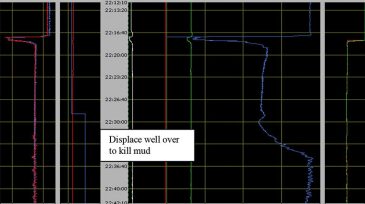
Pressurized-mud-cap drilling (PMCD) and early kick detection (EKD) are two unconventional drilling techniques that have been used widely individually, mostly in relation to closed and pressurizable systems and to managed-pressure-drilling (MPD) applications.
-
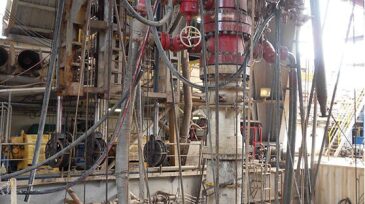
This paper describes a number of system enhancements, including the ability to display and analyze not only the critical parameters of drilling hydraulics but also other information that allows different perspectives in considering the closed-loop system.
-
Our industry is involved in the development of several automated tools and processes to improve the quality of drilling operations.
-
The paper demonstrates the successful application of advanced automated managed-pressure-drilling (MPD) technologies on the Dover well close to Fort McMurray, Alberta, Canada.
-
The development of the Kanowit field offshore Sarawak, Malaysia, requires the drilling of two subsea development wells with a semisubmersible rig.
-
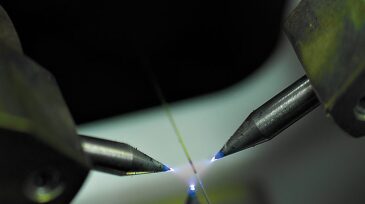
It has been an impressive comeback for a technology that once stood on the brink of failure. The upstream oil and gas industry has largely resolved crippling technical challenges that shortened the life of fiber-optic cables in downhole applications and is now working on a big encore.
-
The list of wells drilled using dual gradient includes one drilled in the “eastern Gulf of Mexico,” which could be more precisely described as offshore Cuba.
-
The Troll field is one of the largest gas producers discovered off Norway, but ensuring its long-term future required finding ways to drill wells in an increasingly fragile formation to develop its rich oil reserves.