Drilling

This paper presents the methodology for developing drill-in organophilic clay-free invert-emulsion-fluid technology that enhances well production through fundamental geological studies and fluid testing.

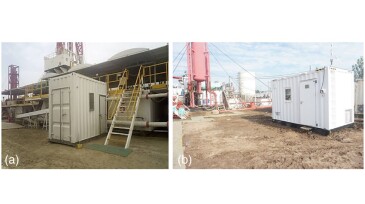
This paper presents the large-scale deployment and operational integration of an advanced, automated rheometer in the Ghawar gas field, one of the world’s most prolific and technically complex hydrocarbon developments.

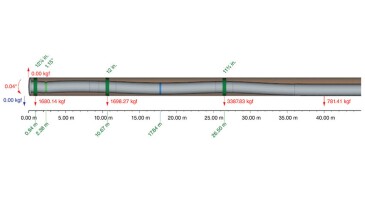
This case study from ARC Resources and DarkVision outlines the use of acoustic imaging tools in two active fracturing programs in Canada to monitor well casing deformation.
-
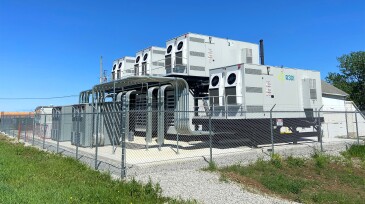
 The drilling contractor is spending big to deploy natural-gas-powered microgrids and battery storage.
-
The proposed facility would be used to accelerate innovations in lithium extraction, carbon storage, and geothermal energy in addition to oil and gas technologies.
-
This paper analyzes the interaction of high-frequency torsional oscillations (HFTO) with lateral vibrations based on a model that accounts for the superimposed movement of whirl and HFTO at the bit.
-
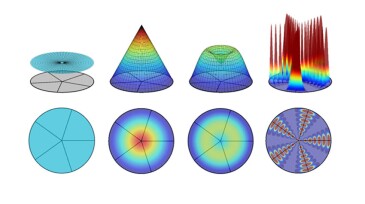
The integration of the latest state-of-the-art technology in modeling and measurement of drilling dynamics and borehole quality has enhanced the understanding of bit, bottomhole assembly, and drillstring design. This can be seen in recent work on analysis of cutter-formation interaction, borehole-quality improvement, and modeling improvements.
-
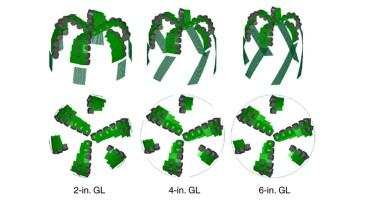
This paper describes a collaborative project to analyze affected wells, identify commonalities, and optimize bit design and drilling parameters to mitigate the effects of borehole spiraling.
-
In this paper, bottomhole-assembly lateral behavior is analyzed using different types of computations, including static, dynamic, frequency-based, and time-based.
-
At SPE’s Permian Basin Energy Conference, operators shared behind-the-scenes details on innovations such as drilling horseshoe wells and trimulfrac completions along with in-basin challenges such as handling produced water.
-
Digitalization and automation of the drilling process drive the need for an interoperability platform in a drilling operation, where a shared definition and method of calculation of the drilling process state is a fundamental element of an infrastructure to enable interoperability at the rigsite.
-
This paper highlights a new online system for monitoring drilling fluids, enabling intelligent control of drilling-fluid performance.
-
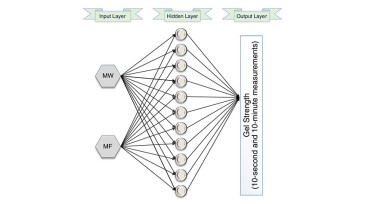
This paper investigates the use of machine-learning techniques to forecast drilling-fluid gel strength.