Drilling

The deals, with a potential value exceeding $3.7 billion, are aimed at strengthening Saudi Aramco’s supply chains and expanding its use of industrial artificial intelligence.

Brownfield redevelopment and new exploration projects could lift Venezuelan output above 2 million B/D by next decade.

This guest editorial addresses the many capacities in which oil and gas technical professionals can play a role advancing the energy technologies of tomorrow.
-
 SPE conference authors offer a trio of papers that blend field practice, simulation optimization, and machine-learning techniques to more-efficiently pursue the goal of longer, highly deviated wells that only grows in importance to the industry with every passing year.
 -
This paper describes the integration of iterative torque/drag/buckling and hydraulic simulations for multiple tapered string combinations, the results of which guided the selection of a string configuration that deemed planned well total depths feasible.
-
Drilling experts recently shared candid views on what will be required for their segment of the upstream business to move to the next stage of development.
-
In partnership with OTC 2026, Rystad Energy has shared its latest outlook for the offshore sector and the role it is expected to play in supplying low-cost barrels through 2050.
-
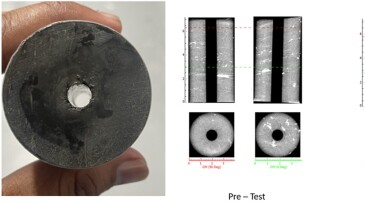
An investigative study examines the use of creeping shale formations as a more durable alternative to conventional cement barriers in carbon dioxide storage wells, potentially enabling safer long-term underground carbon storage.
-
Co-owner Chevron confirmed the find at the Bandit prospect offshore Louisiana and suggested it may become a subsea tieback to existing faciltiies operated by Occidental Petroleum.
-
The Orange Basin and Gulf of Guinea will see most of the high-impact drilling activity planned this year in Africa.
-
ExxonMobil will retain its equity stakes in ongoing Bass Strait projects even as it hands off its operatorship responsibilities to Woodside Energy.
-
Thermal stimulation can accelerate the formation of shale creep barriers for long-term well integrity but only within a carefully controlled temperature window. This study identifies optimal thermal conditions for maximizing barrier performance while avoiding thermally induced shale damage.
-
Conflict‑driven price gains may be offset by higher costs, supply‑chain risks, and a limited appetite for new drilling activity.