Drilling

This paper aims to establish a set of best practices for generating particle-size-distribution data from core samples.

This paper discusses the successful execution of two openhole gravel-pack completions in two Gulf of Mexico fields with depleted reservoirs.

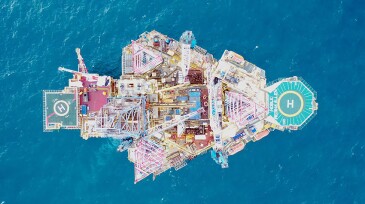
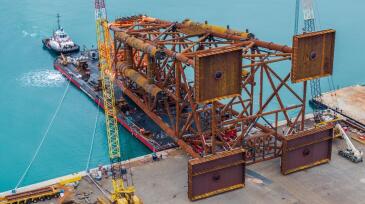
This edition highlights three offshore technology papers that address a common industry theme: how targeted engineering solutions can reduce uncertainty, shorten operations, and make technically constrained offshore well activities more executable.
-
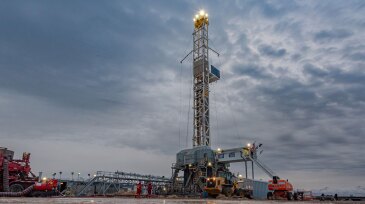
 Digitalization and advanced analytics have enabled drilling automation that is changing the way wells are executed to deliver more production earlier.
 -
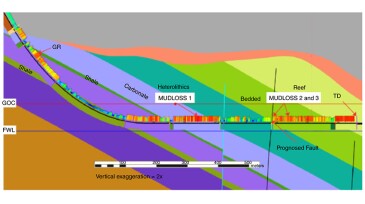
This paper discusses cases from the North Sea and offshore California in which high-fidelity pressure and dynamics measurements, combined with high-speed telemetry, helped overcome complex geotechnical challenges.
-
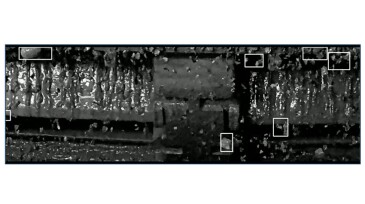
This paper describes an experimentation trial deploying and operating a computer-vision system on a deepwater rig to measure drilled cuttings in real time using a remotely monitored camera system.
-
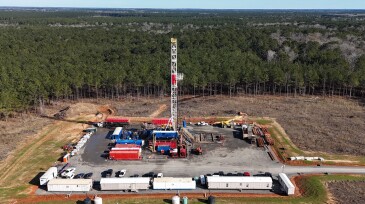
Smackover Lithium, an Equinor joint venture, will drill new wells on the Franklin project to get a better understanding of its brine makeup and lithium potential.
-
Angola expects an 18% rise in natural gas production by 2030 as global producers invest in offshore exploration and new field development.
-
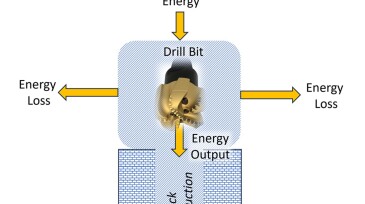
Developing the theory of mechanical specific energy from the perspective of instantaneous drilling power rather than the compressive strength of the formation leads to an improved understanding of drill-bit mechanical efficiency.
-
The oilfield service company will supply power plants capable of electrifying 180,000 US homes with geothermal energy.
-
This article is the fourth in a Q&A series from the SPE Research and Development Technical Section focusing on emerging energy technologies. In this piece, David Reid, the CTO and CMO for NOV, discusses the evolution and current state of automated drilling systems.
-
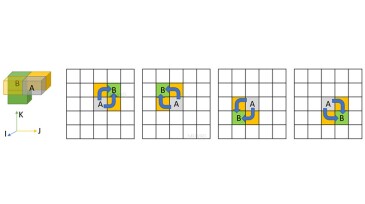
This paper presents an efficient mathematical optimization method for well placement that maximizes contact with the productive zones for the best locations in the reservoir.
-
The operator estimates discovering more than 96 million BOE of recoverable volumes with its latest Norwegian North Sea exploration activity.