Drilling

This edition highlights three offshore technology papers that address a common industry theme: how targeted engineering solutions can reduce uncertainty, shorten operations, and make technically constrained offshore well activities more executable.

This paper aims to establish a set of best practices for generating particle-size-distribution data from core samples.

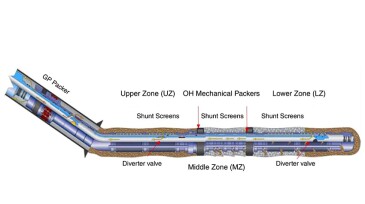
This paper discusses the successful execution of two openhole gravel-pack completions in two Gulf of Mexico fields with depleted reservoirs.
-
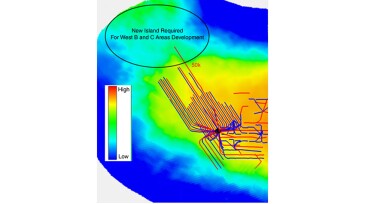
 This paper describes the engineering design and operational execution practices that supported setting of a new extended-reach world record in a mature carbonate field offshore Abu Dhabi.
 -
This past year’s Cementing and Zonal Isolation papers indicated that our industry continues to maintain high levels of innovation and optimization. The evident collaboration between operators and service providers continues to propel technical developments at rates otherwise not possible.
-
This paper presents an evaluation of geopolymer cementing for use in oil and gas wells, specifically in the primary cementing of liner strings in the Permian Basin.
-
This paper presents the completion strategy implemented in an intelligent well completed in Malaysian deepwater Block K.
-
Private explorer Rhino Resources has tapped the oil services giant for upcoming Orange Basin campaign.
-
The latest signs that momentum is building in the geothermal space include military bases.
-
As the biggest US companies grow bigger, the advantage of scale becomes clearer.
-
The national oil company credits lean operating practices and AI for making the three-well, 45,000 B/D project economically viable.
-
SponsoredExpanding its portfolio of high-tier technologies, TAQA develops a high-performance perforation-plugging patented product.
-
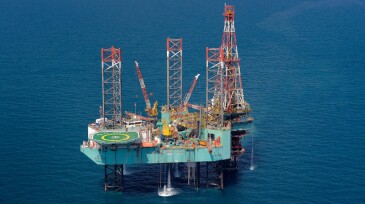
Enhancement to the drillship comes ahead of work commitment on Shell's Sparta development in the US Gulf of Mexico, its first in the Gulf to produce from 20K reservoirs.