Drilling

This paper aims to establish a set of best practices for generating particle-size-distribution data from core samples.

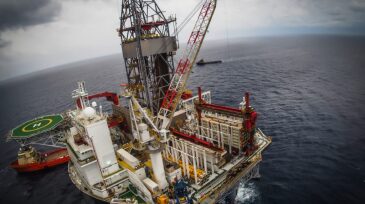
This paper discusses the successful execution of two openhole gravel-pack completions in two Gulf of Mexico fields with depleted reservoirs.

This edition highlights three offshore technology papers that address a common industry theme: how targeted engineering solutions can reduce uncertainty, shorten operations, and make technically constrained offshore well activities more executable.
-
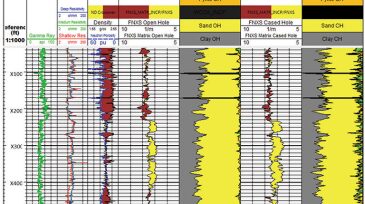
 This paper compares the results of gas identification and lithology identification using pulsed-neutron spectroscopy in openhole and casedhole environments.
 -
Today’s advancements in unconventional technology are worth marveling over, but there is still plenty of room for growth.
-
SPE is presenting a workshop to further understanding of HSE in drilling operations and sharpen knowledge of industry best practices.
-
Just 2 months after issuing more than a hundred licenses, the Oil and Gas Authority begins the process again for a whole new set of blocks.
-
The Apollonia tight-gas chalk play is located in the Abu Gharadig Basin in the Western Desert of Egypt. This has long been ignored as a gas play in the overburden, while the Jurassic and Cretaceous oil fields deeper in the basin have been explored and developed.
-
Saudi Aramco’s aim to localize oilfield services in the kingdom is taking another step forward with an onshore drilling partnership with National Oilwell Varco.
-
Digital Planning and Modeling Enhances Performance of Whipstock Sidetracking System in Complex WellsCombined with advances in whipstock and milling technologies, digital technologies are enabling operators to plan and conduct sidetracking operations with improved flexibility, precision, and efficiency.
-
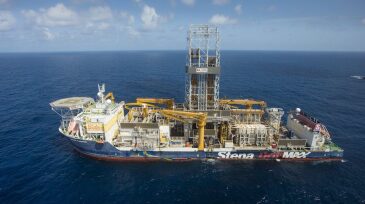
Already poised to produce more than 500,000 B/D offshore Guyana, ExxonMobil added yet another discovery to its bounty in the emerging regional oil powerhouse, meaning a fourth development phase could be in order.
-
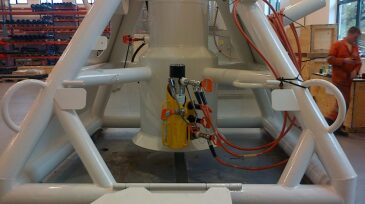
Acquiring data from an abandoned subsea well has been done before, but never quite like this.
-
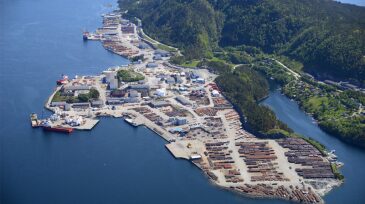
The $10 million/year contract covers the inspection and mobilization of casing and tubing at two Norwegian sites and includes extenstion options in 2020 and 2022.