Drilling

This edition highlights three offshore technology papers that address a common industry theme: how targeted engineering solutions can reduce uncertainty, shorten operations, and make technically constrained offshore well activities more executable.

This paper aims to establish a set of best practices for generating particle-size-distribution data from core samples.

This paper discusses the successful execution of two openhole gravel-pack completions in two Gulf of Mexico fields with depleted reservoirs.
-
 The unique properties of deepwater formations pose significant challenges to the capabilities of conventional drilling rigs. Using automated drilling equipment, including MPD, efficiency and cost savings can accompany safety.
 -
Sustaining innovation and well performance during economic downcycles is a hot topic right now. However, the severity of this downturn has resulted in an unprecedented purging of existing paradigms. In this context, it is important to reveal and highlight new initiatives and success stories.
-
As drilling activity rises, the demand for all that is needed to complete wells rises even faster. The wells are bigger, and more water and sand are used for each foot stimulated.
-
This paper focuses on cementing-design challenges and discusses the engineering techniques used to approach them.
-
Few locations present as many challenges for drilling as the Arctic. It is one of the most hostile environments in the world, with some of the most remote locations, the toughest logistics challenges, and the largest gaps in infrastructure on the planet.
-
This paper describes the method developed to achieve underbalanced drillstem testing (DST) in a deepwater field offshore India.
-
Understanding of formation damage is a key theme in a waterflood project. An integrated multidisciplinary approach is required to determine an optimal design and strategy.
-
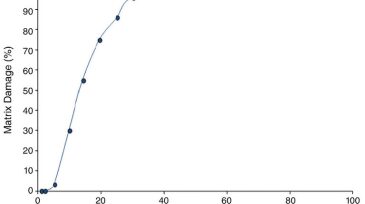
The paper describes a novel methodology to construct distributed formation damage across openhole wells in carbonate reservoirs and to evaluate the effects of damage on zonal productivity.
-
This paper summarizes a wide variety of sandstone-acid-stimulation case histories, highlighting aspects such as mechanical conditions and operational practices.
-
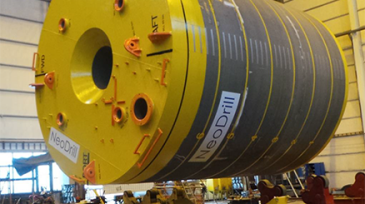
When the industry discusses subsea wells, the tophole construction gets scant attention. The Norwegian company NeoDrill believes it can create a more structurally stable foundation, greater efficiency, and reduced cost by using a conductor anchor node.