Drilling

Research by Enervus sees early 2026 permitting activity for the carbon capture and storage wells pointing to a growing approval queue, even while the rate of applications eases.

The new guidelines were released prior to reports that enhanced geothermal developer Fervo Energy experienced a blowout in Utah with no reported injuries.
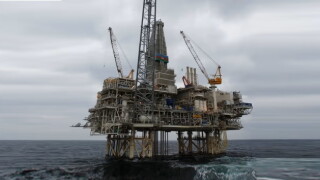
BP said it expects to keep the Azeri-Chirag-Gunashli (ACG) project in production into the 2040s by tapping into separate nonassociated gas reservoirs.
-
 I am encouraged that we, as an industy, continue to refine and tweak our practices to solve zonal-isolation and cementing challenges in every well environment in which we work. As cementing techniques are improved, so, too, are the cement-evaluation methods and work flows.
 -
Against the background of a low-oil-price environment, a redevelopment project was launched to give a second life to a shallow, depleted, mature offshore Congo oil field with viscous oil (22 °API) in a cost‑effective manner.
-
This paper presents the data collected by an ultrasound downhole scanner, demonstrating a novel method for diagnosing multilateral wells.
-
This paper describes challenges faced in a company’s first deepwater asset in Malaysia and the methods used to overcome these issues in the planning stage.
-
The oil industry is currently undergoing a technological transformation that will add value, improve processes, and reduce cost. Future drilling engineers will have knowledge of robotics, automation, and organizational efficiency, which is highly appealing for recruitment.
-
The deal will bolster Arabian Drilling Company’s fleet to 67 rigs across the Middle East and North Africa.
-
Houston-based Surge Energy drilled the Medusa Unit C 28-09 3AH well in the Midland Basin to a TMD of 24,592 ft, with a total horizontal displacement of 17,935 ft, or 3.4 miles.
-
Yellowtail-1 is the fifth discovery in the Turbot area, where ExxonMobil plans another Stabroek Block development hub.
-
Thirteen companies placed bids on 18 blocks in the Austral, North Argentina, and Malvinas West basins as part of Argentina’s first open bid round for offshore acreage in more than 20 years.
-
The discovery will be tied back to the 775-MMcf/D Energean Power FPSO, advancing Israel’s aim of becoming a regional gas supply hub.