Drilling

Research by Enervus sees early 2026 permitting activity for the carbon capture and storage wells pointing to a growing approval queue, even while the rate of applications eases.

The new guidelines were released prior to reports that enhanced geothermal developer Fervo Energy experienced a blowout in Utah with no reported injuries.
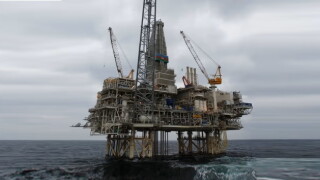
BP said it expects to keep the Azeri-Chirag-Gunashli (ACG) project in production into the 2040s by tapping into separate nonassociated gas reservoirs.
-
 Casing drilling is a method by which the well is drilled and cased simultaneously.
 -
Managed-pressure drilling (MPD) has been used in Vietnam since 2007 to address a number of drilling and reservoir challenges.
-
In 2011, the Kuwait Oil Company (KOC) considered enhancement of equipment specifications for deep drilling rigs to integrate state-of-the-art technologies.
-
A common well-completion configuration for shale-gas wells is a horizontal well with multiple transverse hydraulic fractures.
-
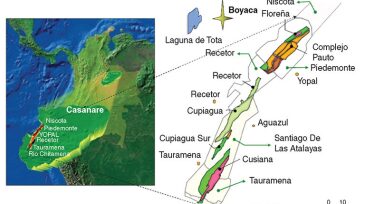
This paper describes the evaluation of a nanofluid containing nanomaterials with high adsorption capacity used for asphaltene inhibition in the volatile Cupiagua Sur oil field in Colombia.
-
Historically, invert-emulsion drilling fluids are the preferred system for drilling offshore Cameroon. However, with a regulatory environment moving toward zero discharge, associated costs are rising.
-
Determining the fluid properties of a reservoir by using pressure/volume/temperature (PVT) analysis is essential to petroleum reservoir studies, production equipment design, and reservoir recovery efficiency estimation.
-
Deepwater cementing becomes increasingly challenging as drilling operations move to greater water depths and more-remote locations.
-
ADMA-OPCO had integrity problems in one of its gas wells, and abandonment was the only option available to restore the integrity of the offshore multiwell jacket and revive adjacent wells.
-
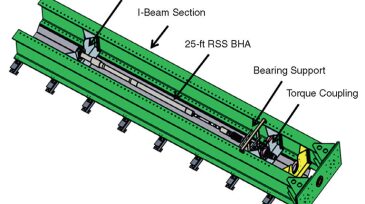
This paper outlines two lesser-known types of torsional dynamics observed while drilling interbedded carbonate formations in the Middle East with the latest generation in point-the-bit rotary-steerable systems (RSSs).