Drilling

This paper aims to establish a set of best practices for generating particle-size-distribution data from core samples.

This paper discusses the successful execution of two openhole gravel-pack completions in two Gulf of Mexico fields with depleted reservoirs.

This edition highlights three offshore technology papers that address a common industry theme: how targeted engineering solutions can reduce uncertainty, shorten operations, and make technically constrained offshore well activities more executable.
-
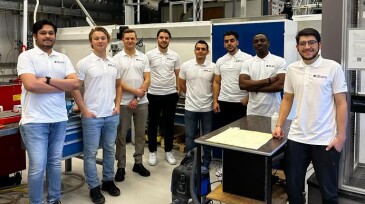
 The winners of this year’s Drillbotics competition are teams from the University of Stavanger and Clausthal University of Technology. Thirteen teams registered last fall, coming from seven countries spanning four continents.
 -
The UAE's biggest oil company said it has successfully delivered a pair of geothermal wells to help power cooling systems in Abu Dhabi.
-
The Caspian Sea's newest platform is equipped with automation technology and will be controlled remotely from an onshore station.
-
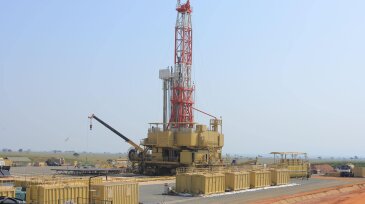
Uganda is on course to become the newest African oil exporter by 2025.
-
The US onshore business is looking flat at the moment, though these sorts of predictions are prone to sudden shifts.
-
The US-based drilling contractor is buying the drilling technology company just three weeks after announcing a merger with NexTier Oilfield Solutions.
-
CNPC’s record-breaking 11,100-m exploration borehole in the Taklamakan Desert promises to unlock the science of producing oil and gas trapped in the world’s deepest reservoirs.
-
A flurry of activity has resulted in several long-term contract extensions.
-
The duo’s new services will be initially deployed in Iraq.
-
The authors of this paper discuss deep closed-loop geothermal systems as an alternative to traditional enhanced geothermal systems for green energy production that is globally scalable and dispatchable.