Energy transition

This guest editorial examines why geothermal projects require a different planning, financing, and development approach than traditional oil and gas projects.

After years of market shocks, technological breakthroughs, and rising uncertainty, ATCE 2026 will provide new insights on how industry leaders and technical experts are preparing for the next era of the upstream business.

This paper presents a flexible, highly cost- and energy-efficient method of gas separation and CO2 capture from many different gas mixtures with a large range of CO2 concentrations.
-
 SPE Journal has issued a call for papers for the 11th Comparative Solution Project (CSP) Special Issue. Organized by guest editors Anthony Kovscek (Stanford University) and Knut-Andreas Lie (SINTEF), submissions that are both directly and indirectly related to the 11th CSP will be accepted.
 -
One expert says there needs to be a transfer of safety culture from the traditional energy industry to the newer offshoot of renewables.
-
The consortium will leverage the oil and gas industry's 100+ years of experience and technological developments in drilling and subsurface engineering to advance geothermal.
-
Controversial metals-rich nodules sitting on the seafloor could hold the key to increased battery production needed to support the energy transition.
-
The upstream oil and gas industry continues to drive innovation in its quest to solve the monumental challenge of supplying energy to the world in an affordable, secure, and sustainable way.
-
An energy transition symposium was held in February in Washington, DC, to inform and engage policymakers and the policy community in the US capital from the perspective of the engineers and geoscientists who currently work to supply 60% of the world’s energy.
-
High energy prices and a greater focus on energy security will not slow the world’s long-term ambition for a low‑carbon future. However, annual analysis by DNV believes unprecedented pressure is reinforcing a two‑speed energy transition.
-
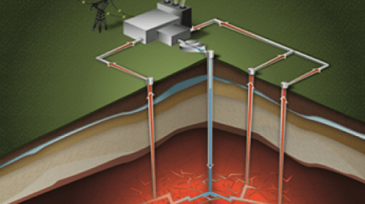
The authors of this paper discuss deep closed-loop geothermal systems as an alternative to traditional enhanced geothermal systems for green energy production that is globally scalable and dispatchable.
-
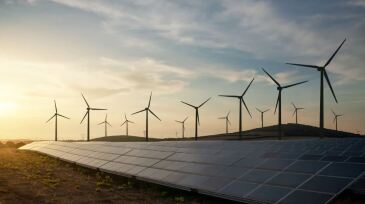
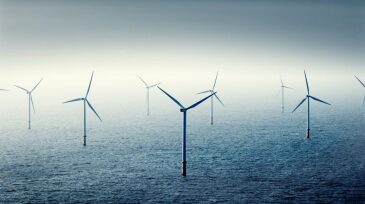
The gathering’s goal is to install 120 GW of wind power in the North Sea by 2030.
-
Several options exist for large-scale hydrogen underground storage: lined caverns, salt domes, saline aquifers, and depleted oil/gas reservoirs. In this paper, a commercial reservoir simulator was used to model cyclic injection/withdrawal from saline aquifers and depleted oil/gas reservoirs. The results revealed the need to contain the stored volume with an integrated…