Enhanced recovery

The objective of this microfluidic investigation is to identify and test two novel applications for magnetic fluids in porous media for subsurface oilfield applications.

This paper explains that the discovery of specific pressure trends, combined with an unconventional approach for analyzing gas compositional data, enables the detection and prediction of paraffin deposition at pad level and in the gathering system.
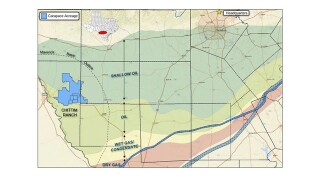
This paper describes a study to design and implement an enhanced oil recovery project via huff ’n’ puff using Y-grade injectant.
-
 The complete paper describes the first successful implementation of natural dumpflooding offshore Malaysia as a case study to provide insight into the value of using the approach to maximize oil recovery in a mature field, particularly in a low-margin business climate.
 -
The enhanced-oil-recovery literature produced in the past several months was dominated by reservoir modeling and characterization; flood enhancements; machine learning; and, more notably, relative permeability estimation. This last one needs to be understood further.
-
Malaysia’s national oil and company will employ the technology suite in secondary recovery and well stimulation. The deal follows the service provider’s recent agreements in the Middle East.
-
In the complete paper, a philosophy for the future of EOR projects is developed through a series of questions that applies to the industry’s transition from completion of conventional EOR toward unconventional EOR.
-
To reach their targets for carbon neutrality, many oil and gas producers are investing in other energy industries. This US company will instead get there by investing more in its oil fields.
-
The challenge is immense, but the promise is, too. If the oil and gas business can scale up CO2 EOR, then it can play a very big role in mitigating climate change while offering carbon-negative fuels.
-
Though shelved by low oil prices, the plan to execute the largest enhanced oil recovery program of its kind offers insights into what it may take for the shale sector to escape pilot mode and scale up gas huff ’n’ puff operations.
-
Before the giant Johan Sverdrup field had produced even one barrel of oil, operator Equinor and its license partners set a recovery ambition of greater than 70% for the field.
-
The complete paper discusses optimization of a development plan involving low-salinity water injection.
-
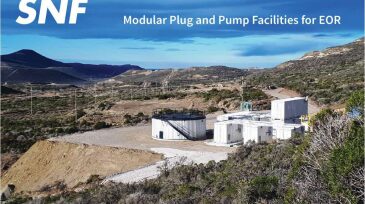
SponsoredPolymer flooding increases the RF up to 20% at $3 to $6 per extra bbl of oil. It also contributes towards reducing CO2 emission by 3–6 times per bbl. It’s a proven technology with more than 300 projects worldwide. SNF offers modular plug and pump facilities connected to existing infrastructure.