Enhanced recovery

SPE Journal is seeking submissions for a special issue on sustainable enhanced oil recovery (EOR), highlighting innovations that boost oil recovery while reducing CO2 emissions and environmental impact. The Call for Papers opens on 15 October 2026.

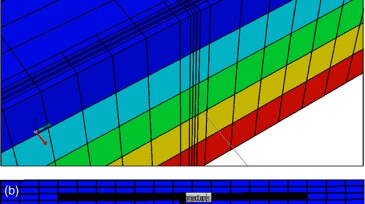
By integrating experimental and mathematical modeling approaches, this work aims to advance the understanding of sand-detachment dynamics and formation instability under varying saturation conditions.

As Egypt’s largest oil and gas investor, Eni is ramping up its 2026–2027 drilling campaign with new investments cross the Mediterranean offshore, Nile Delta, Western Desert, and offshore Sinai to strengthen the country’s role as a regional gas and LNG export hub.
-
 The paper investigates estimation of optimal design variables that maximize net present value for life-cycle production optimization during a single-well CO2 huff ‘n’ puff process in unconventional oil reservoirs.
 -
This paper discusses the challenges presented by factors such as infrastructure, types of primary energy, and investment.
-
This paper illustrates efforts undertaken to evaluate high-viscosity friction reducers and crosslinked gel products, their successful field application, and the importance of maintaining an effective field/laboratory/field cycle.
-
In this article, I will focus on chemical enhanced oil recovery (EOR). What is its current status, and what is its future?
-
This paper describes measures undertaken in the discipline of production technology to prepare for one of the largest field redevelopment projects undertaken by the operator in Austria.
-
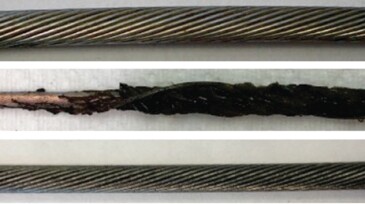
The authors describe the applicability of 110,000-psi yield-strength quench-and-tempered coiled tubing strings in high-pressure sour environments through implementation of a custom-fit coiled tubing integrity and risk-mitigation program.
-
In this paper, the authors discuss what components have contributed to recent proppant-placement cost reductions and use several case studies to illustrate the potential for further cost reductions.
-
This paper summarizes the performance of a polymerflooding pilot conducted in an unconsolidated sandstone reservoir in Oman.
-
This paper aims to clarify misconceptions regarding polymerflooding implementation based on theory and practice in China.
-
It is pleasantly surprising to find a revival in sandstone acidizing. For many years, sandstone acidizing was becoming almost a lost art, overshadowed by carbonate acidizing and hydraulic fracturing.